

Hotels are spaces that host people with very different purposes, some stay for business purposes, others for leisure, etc. In this sense, hotel room lighting has to accompany the different activities that can be carried out in them, always helping to maintain a calm and quiet atmosphere while adapting to the needs of each guest.

To achieve this, at Faro Barcelona we have compiled some tips that you ca follow to make hotel room lighting a success in your project.
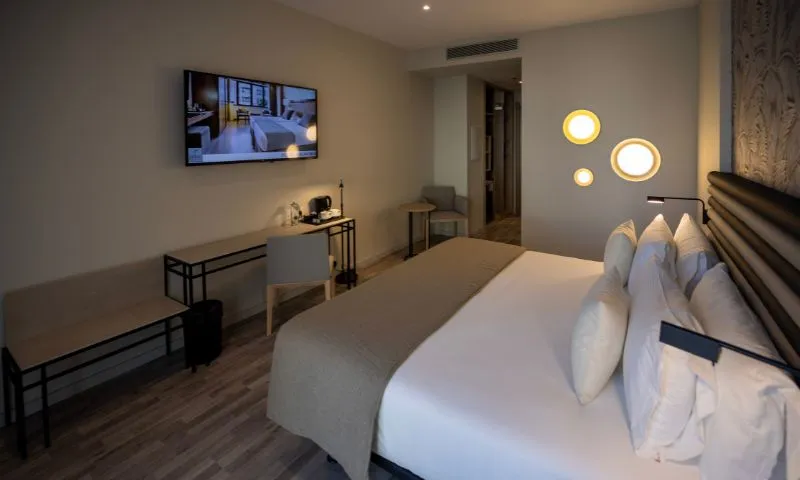
Project: Abba Hotel | Luminaire: SIDE
How to light a hotel room
Hotel room lighting should aim to make guests feel as comfortable as possible. To achieve this comfort, it is necessary to take into account that rooms can be used for activities other than sleeping, such as working or spending time. Precisely for this reason, hotel room lighting has to be designed for the intended use of each part of the room.
General lighting in hotels
We recommend LED strips with indirect light to project a cosy light. LED strips can also be used inside the cabinet, but in this case with direct light.
Bed sides
Without a doubt, wall lamps. Those with fabric shades create a warm and pleasant atmosphere. At this point it is good to keep in mind that in a hotel it is always better to have a 'fixed' luminaire rather than a table or pendant lamp for maintenance purposes.
Reading light
Among the very wide range of reading models, we prefer those that offer spot light and are usually adjustable. This means that the person using it will not disturb the person on the other side of the bed and can do so in any position.

Project: Beau Quartier | Luminaire: NIKO
Working light
Here a good table lamp that provides good light can also become a decorative element.
Signalling light
We must bear in mind that guests are not very familiar with the space, so installing a signal light with sensor lighting will make it easier for them to reach the bathroom in the middle of the night without having to turn on the general light or find the one on the bedside table. This sensor should be short-range and placed close to the floor.
When planning the lighting in hotel rooms, it is also necessary to put yourself in the role of the guests. In this respect, a hotel is nobody's home, so finding the light switches at specific times can be complicated and inconvenient.
For this very reason, short-range light sensors with a signal light that comes on when you put your feet on the ground is undoubtedly the best way to ensure and facilitate minimum visibility at times such as at night.
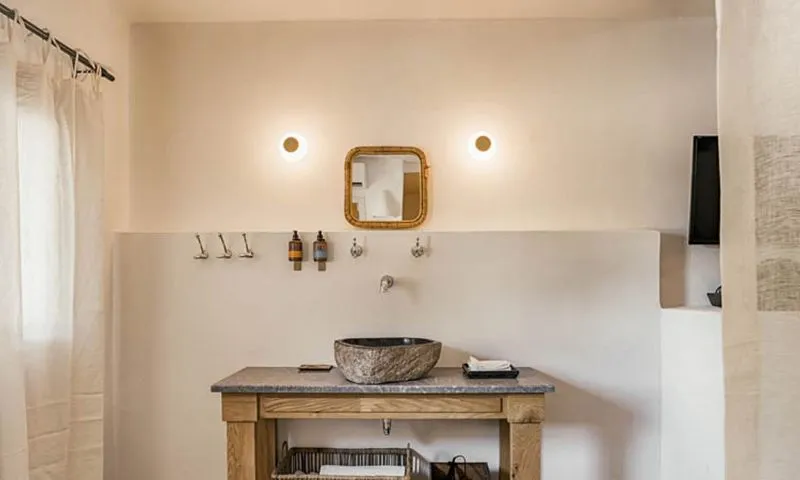
Project: Casita Lindos | Studio: Vana Pernari
Hotel bathroom lighting
Although the most important aspect of hotel room lighting is the room itself, the bathrooms also play a key role in the guest experience. In this case, issues such as colour temperature, as well as the types of luminaires and their locations, must be taken into account.
The colour temperature should be homogeneous throughout the space, and at points such as the mirror, it is advisable that the light falls on the face from both sides to avoid shadows. Overhead light from the ceiling should be avoided in this respect. And, although the washbasin is partly illuminated by the lights from the mirror, including an accent light that gives it its own prominence can add a very original touch to the bathroom design.
When it comes to the shower, the most important thing is to have comfortable light that allows relaxation without dazzling, but still allowing hygiene products to be seen clearly. One option is to use IP65 LED strips in soap niches and ceiling recesses to achieve the perfect lighting in this area. In addition, IP65 is very suitable for showers, and is protected against moisture.
The bathroom in a room also says a lot about the hotel, its style and elegance and the attention to detail, so with good lighting it is easy to win over guests.
Dressing room
Hotel room dressing rooms are one part of a hotel room where lighting can completely transform the guests' perception.
In rooms with made-to-measure dressing rooms, LED profiles are the best option to ensure good visibility, as they provide plenty of light without glare, but also serve to create an original, personalised and elegant effect.
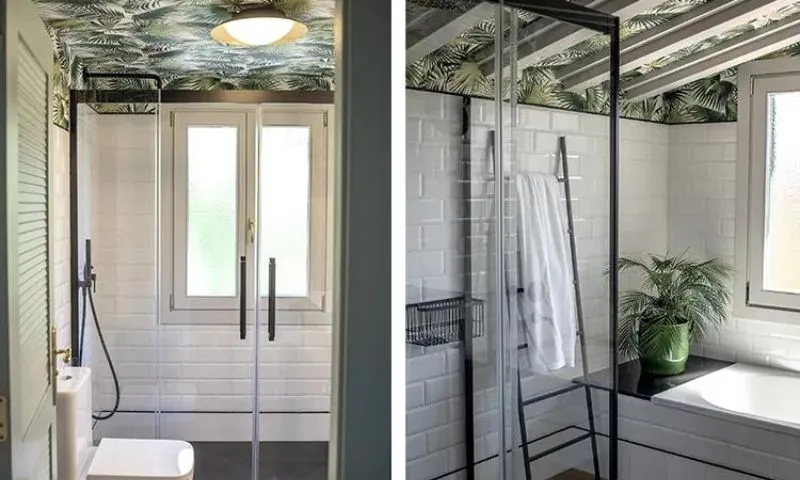
Project: Fuente Real | Studio: Pardo Interior
Entrance
The hotel entrance or lobby plays a crucial role in shaping the first impression the customer forms about the hotel. Therefore, it is essential for the lighting to highlight different areas of interest, helping the customer orient themselves. Areas such as the entrance and exit doors, elevators, and reception should have accent lighting for this purpose. In contrast, for the lobby and relaxation areas, we opt for a more relaxed lighting with decorative and warm fixtures.
Hallways
To illuminate the hallways, we must consider that it is a heavily trafficked area at different times and for various reasons, so we need to ensure that customers make as little noise as possible when going to their rooms.
The hallways should be lit in a 'calm manner,' always with signaling luminaires with sufficient power to guide us. We recommend asymmetrical luminaires with low-level grazing light. Additionally, these can be complemented with lights to highlight the room numbers.
Bar and Breakfast Area
The food display area should be evenly and generally lit. The CRI or Color Rendering Index plays a crucial role in the perception of colors, which can impact the appearance of food and make it more appetizing. Therefore, our recommendation is the use of CRI90 LED light, allowing for vibrant color perception and enhancing the diner's experience.
In the bar and table area, you can use more focused and dramatic lighting to add a special touch and highlight the interior design. Installing a lighting control system is very interesting. This allows us to create different atmospheres depending on the use of the space or the time of day.
Emphasizing lighting comfort and always avoiding glare is important. High light intensity is not required; it should be comfortable and sufficient for sitting at the table comfortably.
Importance of hotel room lighting
As we mentioned, hotel rooms are somewhat multi-purpose spaces where people can go for a variety of reasons. In this sense, lighting is important not only for its contribution to the aesthetic result, but also for its role in creating a calm atmosphere.
One of the things that guests value most is silence, and there is no better way to promote silence than by creating an atmosphere in which to breathe relaxation and tranquillity.
In the same way, lighting in hotel rooms is essential to act as signage. It is important to think that guests may never have been in that space before, so having a light to guide them both in the room and in the corridors is the key to greater comfort. Luminaires such as Plas, Signal or Nase are ideal for this type of lighting.

Project: Fuente Real | Studio: Pardo Interior
What is most important in an outdoor lighting project for hotels ?
The most important thing is to consider lighting in the early planning stages of the project as all lighting requires wiring.
Another important aspect is to be aware of the use of each area so as not to over-light or to take into account key areas such as entrances, paths or walkways, steps and windows.
A fundamental aspect is to work with dimming systems and presence sensors so as not to have more consumption than necessary, as they only switch on when necessary and switch themselves off when there is no more movement.
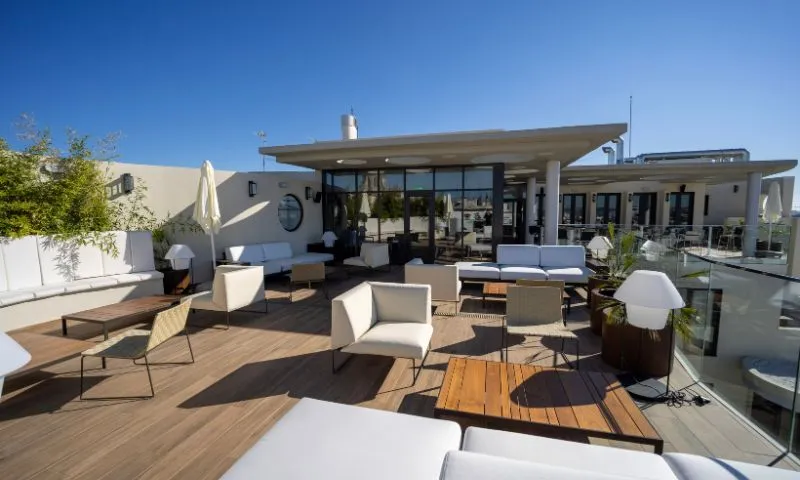
Project: Hotel Abba | Luminaire: VERSUS
How the different outdoor areas should be lit
Swimming pool
The swimming pool can be illuminated with recessed spotlights inside the pool or with LED strips hidden around the perimeter.
Beach clubs
In the case of pergolas we try to illuminate with spotlights from the top of the pergola masts, up & down lights could work very well. It is common to use garlands in these environments as they create a very cosy environment. Sometimes we use hanging lights, although this is not recommended as they can sway uncontrollably in windy conditions.
Passageways in gardens
In these areas we usually use beacons. They can be of general light, they will illuminate both the passage area and the vegetation (such as our AGRA model). This type of luminaires can be of punctual light, in this case the light will always be oriented to the passage area to mark the way (like our SPY beacon lamp).
Vegetation
It can be illuminated with stakes of different powers and opening angles. It is a very convenient and easy to install system. Here we differentiate between:
- Shrub type trees: a 3W luminaire such as our BALDER model will be sufficient.
- Medium sized trees: we will use a 6W luminaire.
- Large trees: we will use more powerful bulbs such as our FOC model. It is important to control glare, for this it is very useful to use luminaires with a visor like the FOC model.
- In the case of palm trees that can grow very tall, the use of prismatic luminaires such as the PLOM is recommended. These are luminaires that use a prismatic lens to regulate the degrees of opening; the higher the palm tree, the narrower the angle of opening to illuminate the top of the tree.
Passage areas with walls
We can use MUST type luminaires. Depending on the material of the wall, recessed or surface-mounted luminaires can be used.
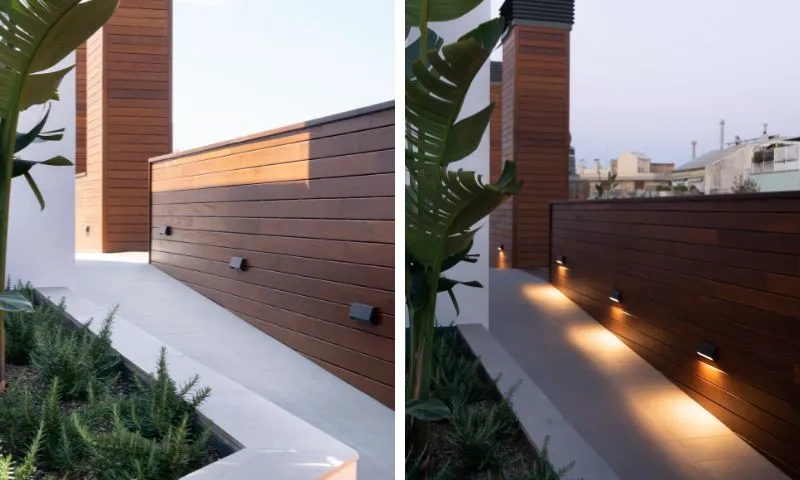
Project: Paris Street | Luminaire: MUST
- On hotel terraces it is recommended to use UP/DOWN wall lights to avoid light pollution. SUNSET is usually a good alternative.
- Finally, if we have platforms that we want to illuminate, we will do it with a spotlight such as the CROSBY 1w or 2w and an opal diffuser to avoid dazzling. This option will be a signalling light.
- In the case of façades, it is ideal to use a recessed light with a honeycomb panel so that it does not disturb people as they pass by.
What are the latest trends in outdoor lighting ?
More and more colour is being used outdoors, "corten effect" finishes are quite common and black is also popular. However, black is more difficult to keep clean than anthracite grey, which is still the most popular colour.
What are the innovations ?
A lot of importance is being given to dimming and control systems to be more efficient. We are also taking into account the light pollution of the environment surrounding the hotel, we are avoiding too much lighting, we are regulating it to preserve the environment.
Intelligent lighting control in hotels
Controlling the lighting in hotel rooms is no longer a complex task, thanks to lighting control systems.
These systems make it possible to control and regulate the lighting of the entire space, considerably reducing energy consumption and making use of light when necessary.
In addition, this makes it possible to automate the lighting, so that achieving the perfect light at every point is not a complex task, but rather something you no longer need to worry about.
In this sense, using domotics or intelligent control systems for hotel room lighting is undoubtedly the key to greater comfort, a better user experience and total comfort.
Lighting is an essential part of hotel design. Good lighting enhances and emphasises all the positive aspects of a hotel that you want to highlight. In addition, it can also help to hide areas that are not so beautiful.
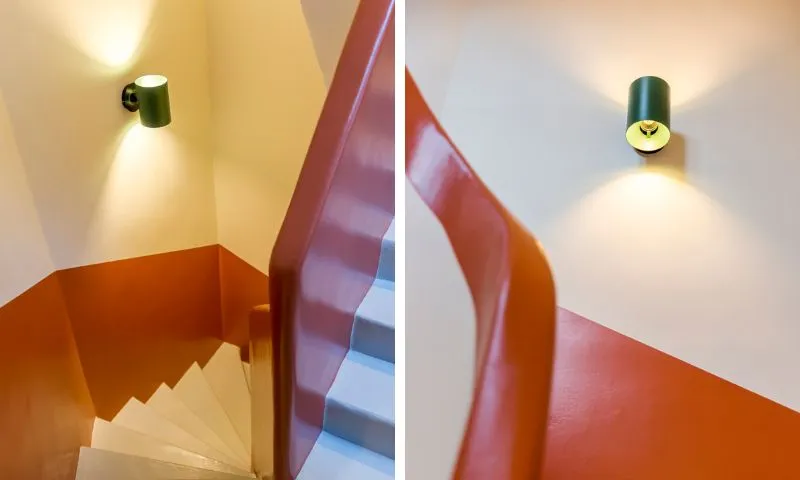
Project: Beau Quartier | Luminaire: Guadalupe
Light has a direct effect on our physical and emotional state. That is why it is essential to give it importance and create comfortable environments with the right light so that guests have a good feeling during their stay.
Finally, outdoor lighting has a safety component that we must take into account as it serves to mark areas. Guests walk through outdoor areas and they need to be able to see the areas they are passing through well lit.
Do not hesitate to contact us and we will make your lighting work a sure success.