


1. What is a downrod and why is it important?
When we talk about ceiling fans, there’s a small detail that makes a big difference: the downrod.
Downrods for ceiling fans are elongated components that help adjust the distance between the fan and the ceiling—key to achieving efficient and safe airflow.
In rooms with high ceilings, using a downrod is almost essential. Without it, the fan would be too close to the ceiling, which would impair its performance and reduce the feeling of freshness. It also enhances safety by ensuring the blades aren't too close to beams or decorative elements.
Still unsure how to choose the perfect ceiling fan for your project? Check out our ceiling fan buying guide.
2. When is a downrod necessary?
Not every space needs one, but there are situations where installing a downrod is crucial for proper fan performance. Here are three clear examples:
1. Distance between the blades and the floor is too large. Although ceiling height matters, what really counts is the distance between the blades and the floor. When that distance is too large, the airflow won't reach where it’s needed. In these cases, a downrod helps lower the fan to a more effective height, improving freshness and performance.
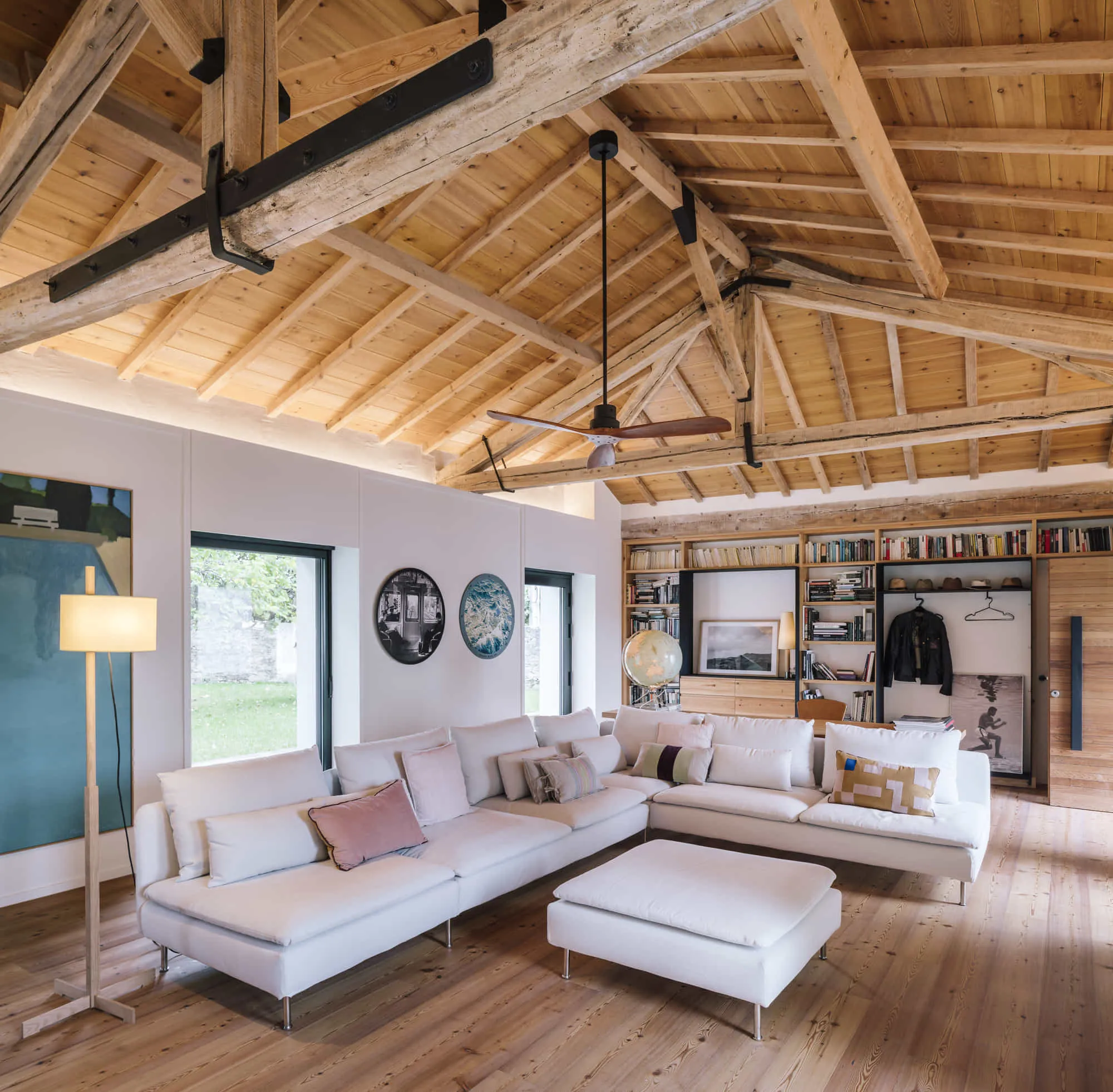 Fan model: Lantau | Architecture: Zooco Studio | Photography: Imagen Subliminal
2. Fans installed above beds or tables. In bedrooms or dining areas, it’s common to place the fan directly above a bed or table. A downrod allows for perfect centering and sets the fan at a height that is both functional and visually balanced.
3. Sloped ceilings. When installing a fan on a sloped ceiling, a downrod becomes essential. In vaulted or angled ceilings, the downrod ensures proper alignment for safe and stable operation. Many of our models are compatible with this type of setup. You can check technical sheets to see if a fan supports angled ceilings and the maximum tilt degree allowed.
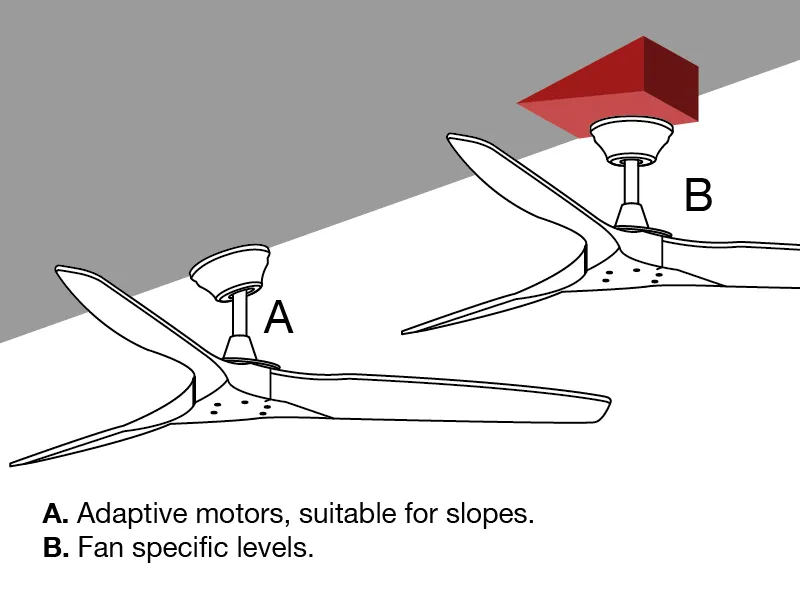 All our fans include a standard downrod in the pack. You can check its length on the technical sheet. Some models even include multiple rods, so you can choose the one that fits your space best. Need something special? We have a wide range of lengths in stock.
3. How to calculate the ideal downrod length
One of the most common questions when installing a ceiling fan is: what length of downrod do I need?
The answer depends mostly on the height of the ceiling and the fan itself, but the most common recommendation is a distance of around 2.3 meters from the fan to the floor.

Here’s a simple method to find out what downrod length you need:
- Measure the total ceiling height
- Subtract 2.3 m (optimal fan height from the floor)
- The result is the total height the fan should reach. Refer to our catalog to see total fan heights based on downrod length, and choose the most suitable option.
* Note: some models already include multiple downrods in the box so you can choose the one that fits best. And if you need something specific, we also offer custom-made downrods.

Fan model: Just Fan | Project: Hotel Can Ferrereta
4. Use our downrod configurator online
Choosing the perfect downrod has never been easier. At Faro Barcelona, we’ve created a tool designed to save you time and avoid mistakes: the downrod configurator, a tool that guides you step by step. Just select:
- The downrod model compatible with your fan
- The finish
- The diameter
- The required length
And instantly, you’ll get the exact reference you need to order. No complicated math or guessing.
Also, all our downrods designed for your fan are pre-wired when additional wire is needed, making the installation quicker, cleaner, and more efficient. Since they’re made for each specific model, they ensure a perfect fit.
5. Practical installation tips
Installing a fan with a downrod is easy if you follow a few basic rules. Here are key tips to make the process safe, efficient, and flawless:
Before starting: check compatibility
Make sure the fan and downrod are compatible. All Faro Barcelona models specify in their technical sheets which optional downrod to use. We also indicate if the fan is suitable for sloped ceilings, which is essential for certain spaces.
Height and angle control
During installation, make sure the fan is level—especially on sloped ceilings. If using a downrod, ensure it’s properly aligned and secured using the kit components provided.
For sloped ceilings, you can check the installation specs here.
Allow blade clearance
The blades must rotate freely. Maintain a minimum distance of 0.6 meters between the blades and any decorative elements, beams, or tall furniture. The minimum distance from blades to ceiling is indicated in the technical sheet as A1.
If you have any doubts, you can always rely on our professional installers or consult the assembly guide included with each model.
—
Now you know all the essentials about downrods for ceiling fans.
Need advice for your project? Our technical team is here to help. Get in touch!
