Although it is not difficult to imagine wireless lighting in an interior space, in the case of gardens we often opt for this option, due to the convenience of installation and adaptation. However, is this the right choice for these spaces?
In this article we will not only discuss the advantages and disadvantages of lighting a garden without cables, but we will also look at the best ways to enjoy our outdoor spaces.

When do you light a garden without cables?
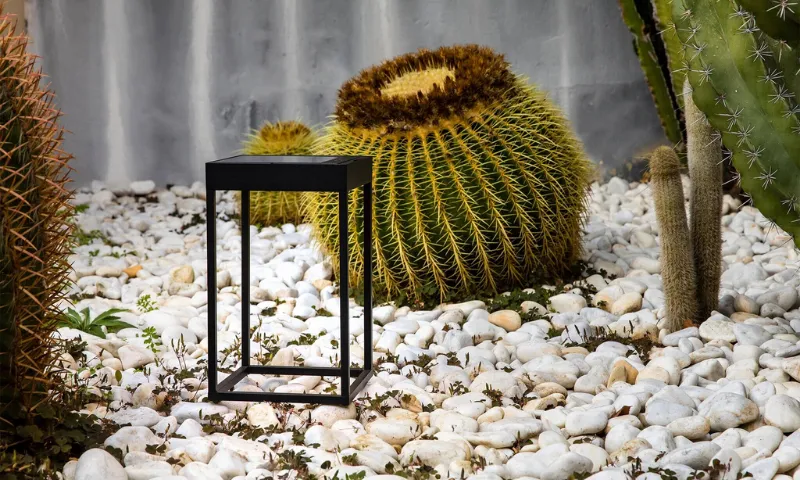
Before we continue, let's clarify what we mean when we talk about wireless lighting. Basically, there are two ways of doing this: through solar luminaires and portable luminaires.
Solar luminaires are those that have a built-in solar panel so that they can be recharged during the day. This is the case of options such as Kasp, Soleil or Saura, which in some options (such as Soleil), turns on automatically when it detects that the ambient light has diminished, or even when it detects that there are people around (as in Saura).
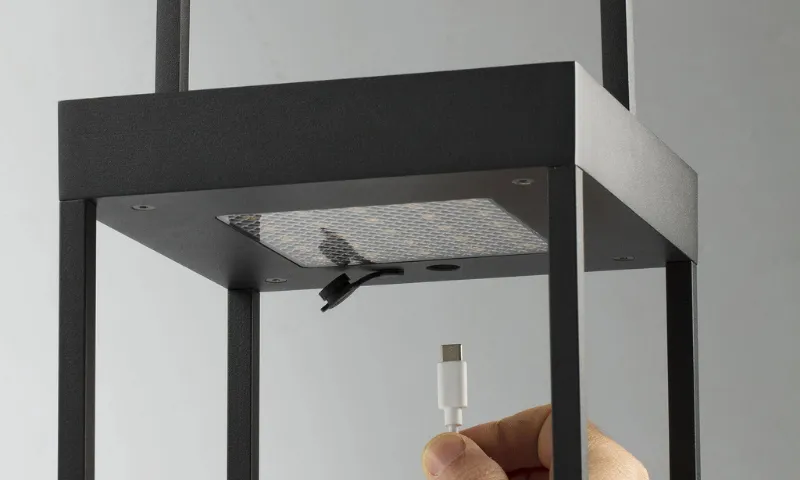
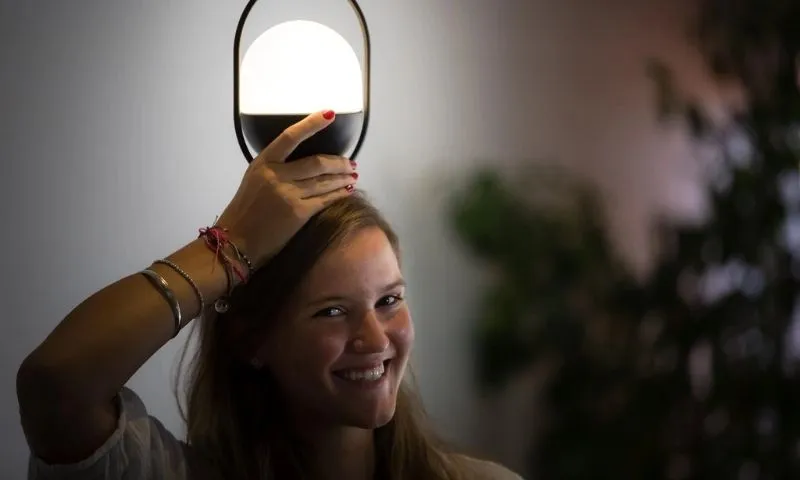
On the other hand, there are portable luminaires, such as Take Away, Jelly Fish or Argus,which have the clear advantage of being able to be taken wherever we need them. However, they usually have a maximum autonomy, and the user will have to be aware of the need to charge it in order to use it.
Benefits and disadvantages of wireless garden lighting
This type of lighting has its own advantages: the most obvious is that it is not necessary to rely on an electrical installation for its operation. For example, in the case of solar luminaires, installation is very quick and easy. However, their luminous flux is very weak and may not meet people's needs. In other words, they tend to emit very little light and can be uncomfortable for the user.
For this reason, our recommendation is to opt for wired garden lighting that allows less dependent and more people-friendly options to be installed. In this way, we manage to recreate warm and inviting gardens, which are a social space for enjoyment.
Even so, even if we get more power, the garden must be illuminated in specific ways if we want to feel at ease in it. Do you know what are the main keys to create a dream garden thanks to lighting?
Tips for creating a pleasant atmosphere in the garden
Let's take a look at the main recommendations to create an ideal space in the garden and enjoy the sunsets and summer evenings with the family.
When it comes to garden lighting, you should follow the same basic rules for indoor lighting. That is, you should only light the necessary spaces, and differentiate each area with different types of lighting, depending on the use you want to make of it.
A very common mistake is to want to illuminate the garden excessively, with the aim of imitating natural light. However, we must not forget that the aim is to create a pleasant space that invites us to relax and to adapt to a nocturnal environment. It is up to us to avoid unnecessary and unpleasant light pollution for the human eye.

How to light every part of the garden
Just as it happens inside a room, the garden can also have parts with different uses, even if it is not delimited by walls. In fact, in these cases, the lighting will be key to mark the functionality of each area. Let's take a look at the main parts of the garden and how we can light them:
Passage areas
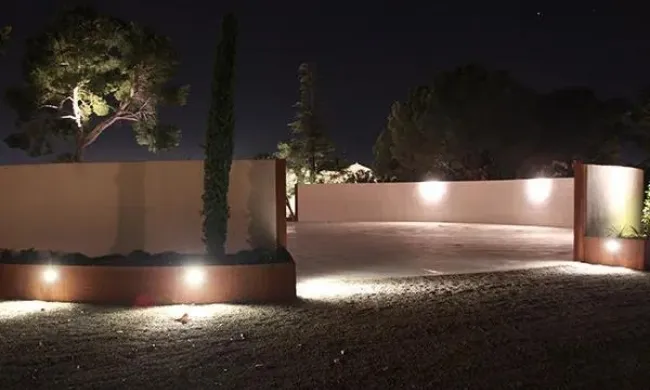
It is common for passageways to be the entrance to the house, the paths we find in the garden, the entrance to the garage or the perimeter of the house. In these cases, we can choose to light from the wall, at ground level, with elements such as Dart or Kane, or from the floor, with Crosby. In this way, we avoid possible glare and improve the experience of walking through the garden.
If we want to illuminate from a higher point, we can also do it through stakes, with a model such as Seth, or from the façade, with wall lights with a diffused light such as Mask. However, in these cases we must remember the rule of not focusing directly on the user, to avoid any sensation of blindness that might make the person uncomfortable.
Relaxation zones
These areas are the most welcoming, and for this reason we will have to pay special attention to the lighting, as its function is to create a soft and relaxed atmosphere. In these cases, the light will be ornamental and will discreetly illuminate the surrounding elements.
Above all, in these areas we should avoid a ceiling light, as the intention is not to create a general or homogeneous lighting. You can try standing or table lights to achieve a soft and serene light source. Another fun option is to use garlands, especially if our area is usually windy.
Working areas in the garden
And finally, we must also bear in mind that there are areas in the garden where we can work... For example, to cook a good barbecue! To carry out this type of task, it is essential to have good lighting to cook safely. For example, we can use models such as Cabo, which will allow us to visualise our outdoor workspace well.
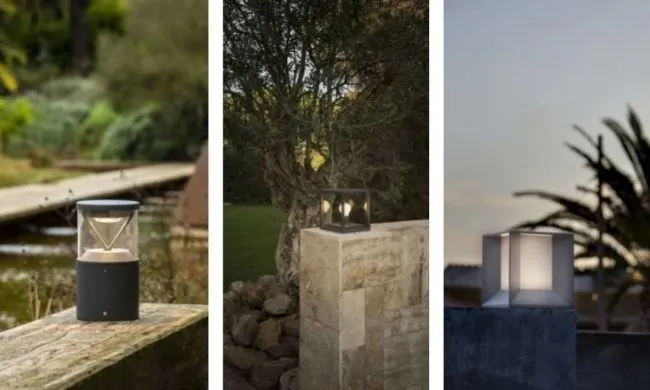
Wired garden lighting: a world of possibilities
As you have read in this article, our recommendation is to opt for wired garden lighting. Although cordless lighting may initially seem like a good option, in the long run you will realise that you will not be able to light the areas with the necessary power, nor will you be able to play with all its possibilities.
For this reason, if you want to create pleasant areas in your project that invite you to spend unforgettable evenings in the garden, use wired lighting, following the tips for lighting each area in the most appropriate way.
Do you have a garden lighting project in hand? At Faro we will be happy to give you a personalised service to find out which is the best option for each area of the garden.