

The intensity of light plays a crucial role in almost every daily activity. Seeing clearly and distinguishing objects is key for tasks that require precision, while in other settings, the required light intensity can vary greatly.
While it is partly a matter of personal preference, light intensity should never be the same in an office as in a living room.
In professional lighting, understanding how to measure and apply light intensity correctly is essential to create functional, comfortable, and balanced environments. Before diving into how to calculate it, let’s look at how it is measured.

What is light intensity and why does it matter?
Proper intensity allows you to create relaxed atmospheres or achieve precise lighting depending on the space’s purpose. That’s why, before choosing a light fixture, it’s important to know how to calculate the correct light intensity.
If you want to learn more about how light is measured, check out our article on how to calculate light intensity.
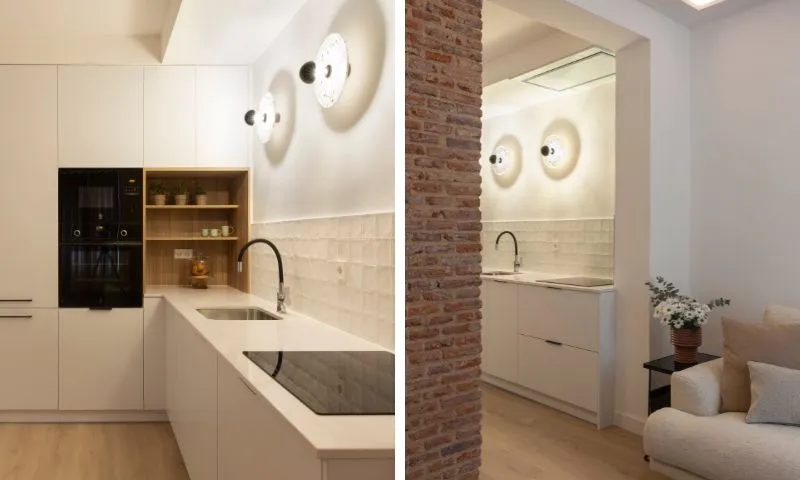
Project: Nash Arquitectura | Fixture: Confetti
How is light intensity measured?
Although there are several ways to measure it, the most common units are lumens and lux.
Lumens vs. Lux: what’s the difference?
- Lumens (lm): total amount of light emitted by a fixture.
- Lux (lx): light actually perceived on a surface.
Between emitted lumens and perceived lux, there is light loss caused by distance, beam angle, or furniture.
This is why lux is the most practical unit for planning light intensity, as it reflects the actual lighting level in a space.
This measure is key in architecture and interior design, where balancing lumens and lux properly is essential.
How to calculate the light intensity you need
To calculate the right light intensity, consider:
- The area in square meters to illuminate.
- Existing furniture, especially if it’s dark, as it absorbs more light.
In homes, light intensity can be adjusted to personal preferences. In technical projects — especially in commercial or contract spaces — the most commonly used software is Dialux.
This free tool allows you to design lighting projects, calculate levels, and create solutions for both indoor and outdoor spaces.
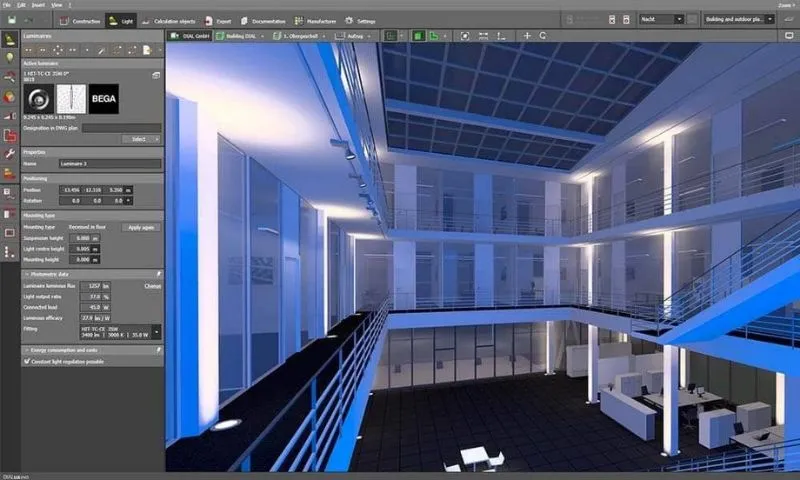
Dialux software | lighting design
Recommended intensity by space type
The lux needed depends on the activity performed. In public areas, regulations set minimum values. Here are our recommendations:
Residential spaces
- Kitchen – 300–600 lux
- Living room – 100–300 lux
- Hallway – 300 lux
- Bedroom – 100–300 lux
- Study – 200 lux
- Bathroom – 300–600 lux
Commercial spaces
- General lighting – 300–600 lux
- Exterior displays – 1000–3000 lux
- Interior displays – 1000 lux
- Showcases – 1000–3000 lux
Hospitality
- Dining rooms and lounges – 100–600 lux
- Reception – 100–500 lux
- Bars – 100–500 lux
Offices
- Stairs – 100–350 lux
- Work desks – 400–1500 lux
- Meeting rooms – 200–700 lux
Other factors that affect light intensity
The color temperature and beam angle have a direct impact on the result.
Warm lighting creates a cozy and relaxed atmosphere, while cool tones are better suited for spaces requiring visual accuracy.
The beam angle will determine whether you want ambient or accent lighting.
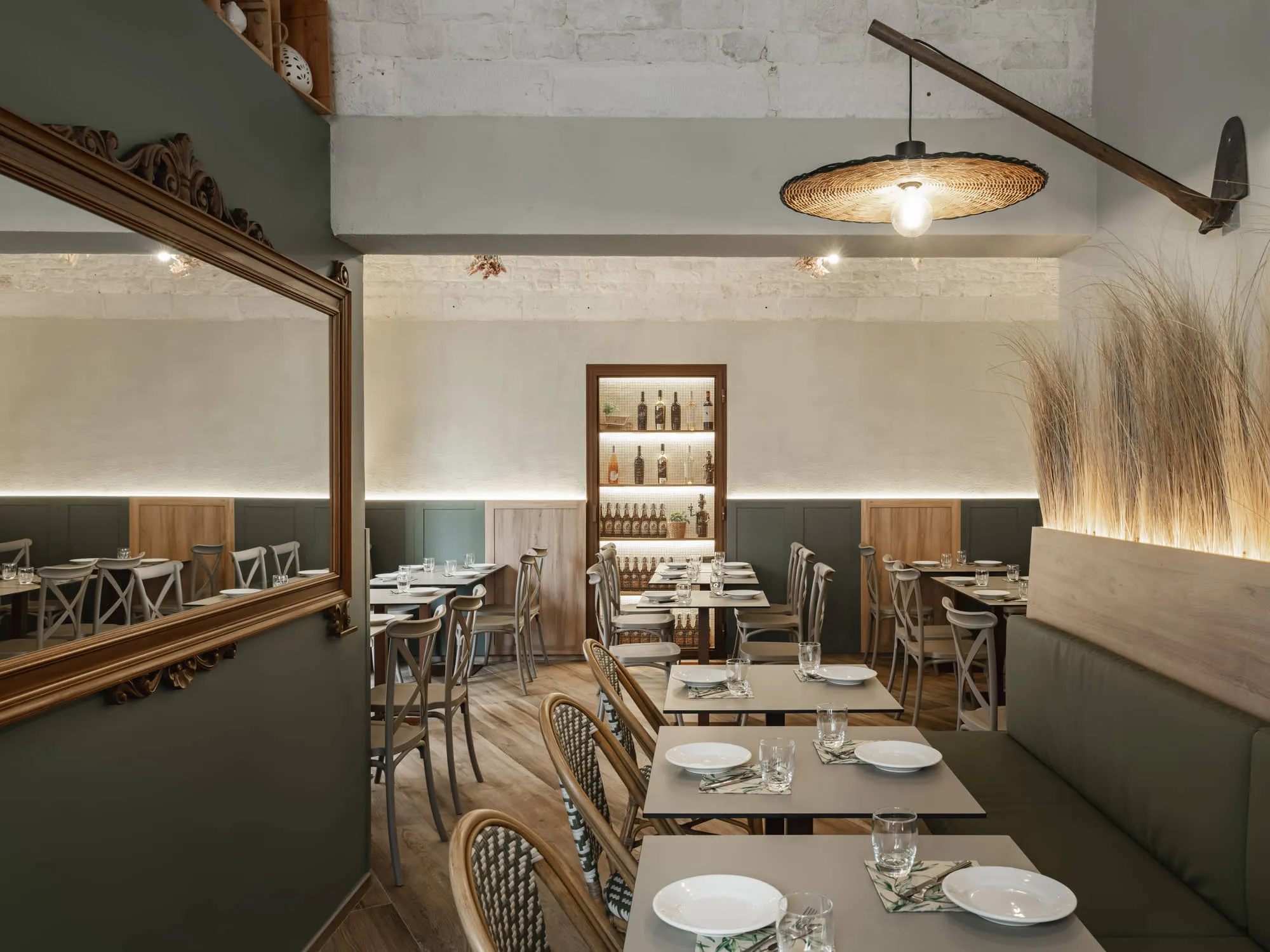
Project: Pizzeria Combà | Design: Coppi Roberta | Photography: Pierangelo Laterza
Conclusion: how to apply light intensity correctly
Choosing the right light intensity means considering the space, the activity, and the desired atmosphere. Combined with color temperature and the right optics, it’s the key to a result that’s both functional and aesthetic.
Want to optimize light intensity in your projects?
At Faro Barcelona, our technical team can help you calculate the ideal light intensity and choose the most suitable fixtures for your project.
Request professional advice and get a tailored lighting design.
