

Although when choosing a recessed luminaire for a project it is usually based on aesthetics, it is important to bear in mind that there are different types of recessed luminaires to know which one is the most suitable in each place.

Each of these types serves for specific places and areas and is designed to fulfill a specific function, so you have to know to some extent the specifications of each type to know how and where to integrate each recessed luminaire in your project.
What is a recessed light?
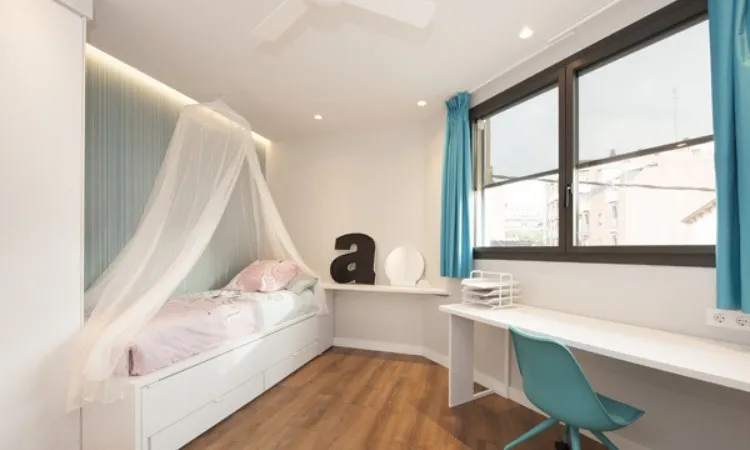
Recessed light is any light that is installed embedded in the wall, the support, and even the ceiling. It is a type of lighting where not only the design and aesthetics are important, but also some factors such as the opening angle or the lumens they have.
In the case of recessed lights, each light itself is hidden behind its own light, so that it is not a decorative element at all, but rather a type of lighting that is fully integrated into the architecture and style of each space in a discreet way but providing personality and originality.
When choosing the lighting that best suits your project, the design must be consistent with the rest of the space. However, bearing in mind that recessed lights help to highlight specific elements and zones in a room, the most important thing is to pay attention to the angle of the light opening.
Installation tips for recessed luminaires
When installing recessed lights, two main factors must be taken into account:
The opening angle
The distance between the luminaires
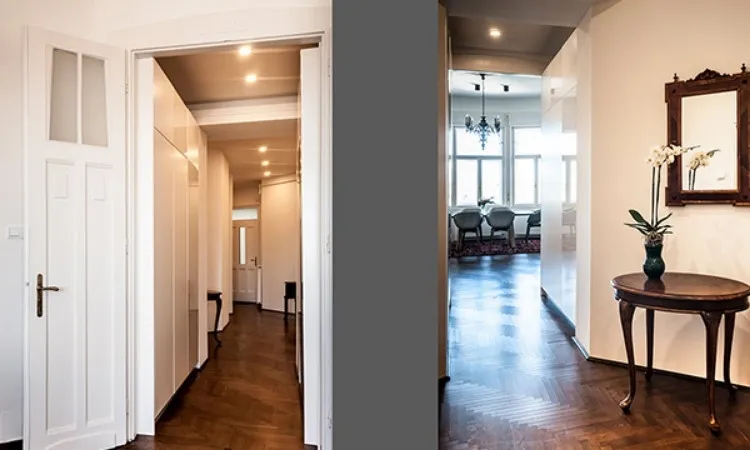
The angle of light that you choose depends on whether you want to create a feeling of spaciousness and minimize shadows as much as possible, or on the contrary, to highlight certain areas or objects. In the first case, the correct approach would be to use a large aperture angle (120º), while in the second case a more narrow aperture angle would be required, below 90º.
The distance at which the recessed lights are placed, on the other hand, is something that is not defined but depends on some issues such as the opening angle or the height of the support.
Taking this into account, for luminaires with an opening angle of about 60º we recommend a distance between 80 and 90 cm between the luminaires. For those with an opening angle of 120º, however, the distance should be up to 120 cm.
Examples of the use of each type
As we mentioned at the beginning, a recessed light is installed by embedding it in the support, wall, or floor, creating different effects and having different functions in each of these places. In addition, it is a question of lights with different applications both in interior and exterior spaces.
When we talk about recessed luminaires, downlights are the preferred ones.
Although their installation is very simple and can be carried out at the user level, it is important to take into account what space in which they will be installed will be used.
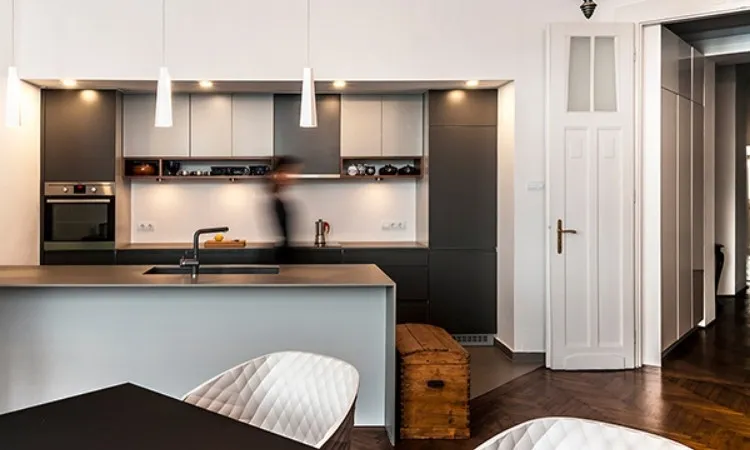
This way we can know where to install them and what effects we are looking for. The lights to the support are perfect both to highlight areas and objects and to illuminate in an indirect way.
As far as ground recessed lights are concerned, they are quite common in exteriors, where they are especially useful for illuminating passageways and marking paths.
These lights must be placed in such a way that they do not glow, and the light they provide is also indirect and decorative.
If you want to consult the different types and models of recessed lights that we have at Faro Barcelona, do not hesitate to contact us.
Among our wide range of lighting, you will find the perfect lighting for your project, always looking for the best comfort and convenience of the people.