

At Faro Barcelona, measuring our impact and acting accordingly is part of our daily routine. In line with our commitment to sustainability, we now have the results of the 2024 carbon footprint analysis, which confirm that we are moving in the right direction.
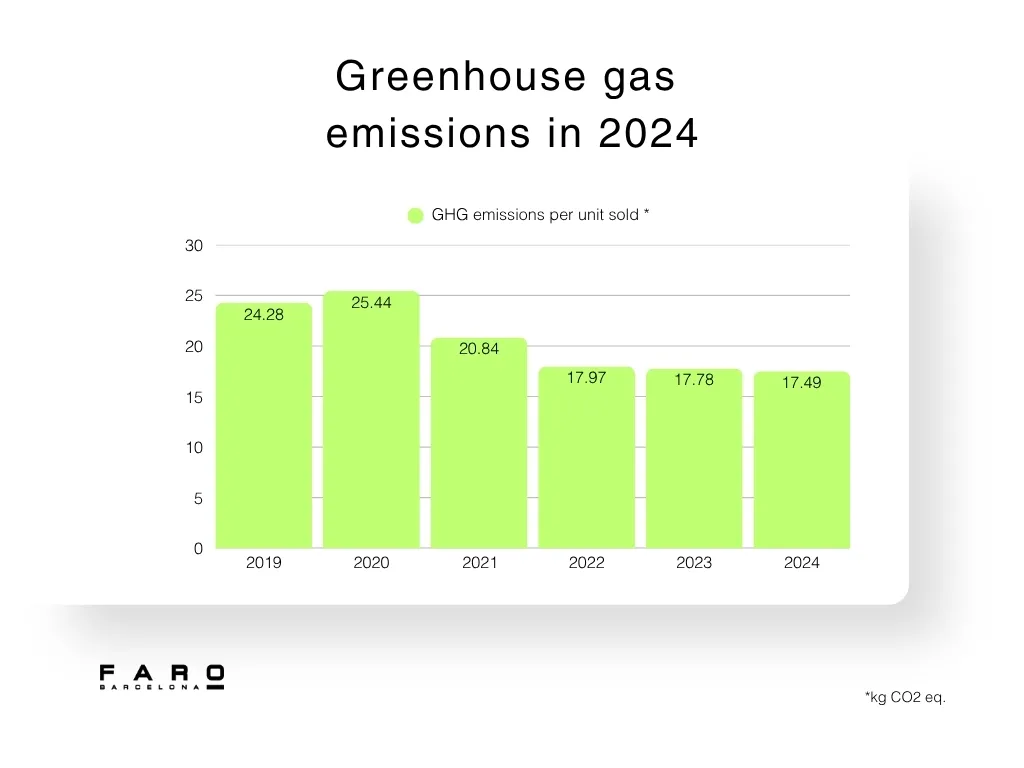
The overall results are very positive: we have reduced our total emissions by 6.4% compared to 2023, and by 24% compared to 2019.

These figures are also encouraging from another perspective: the impact per product sold has decreased compared to the previous year, and has dropped by 27.9% compared to five years ago.
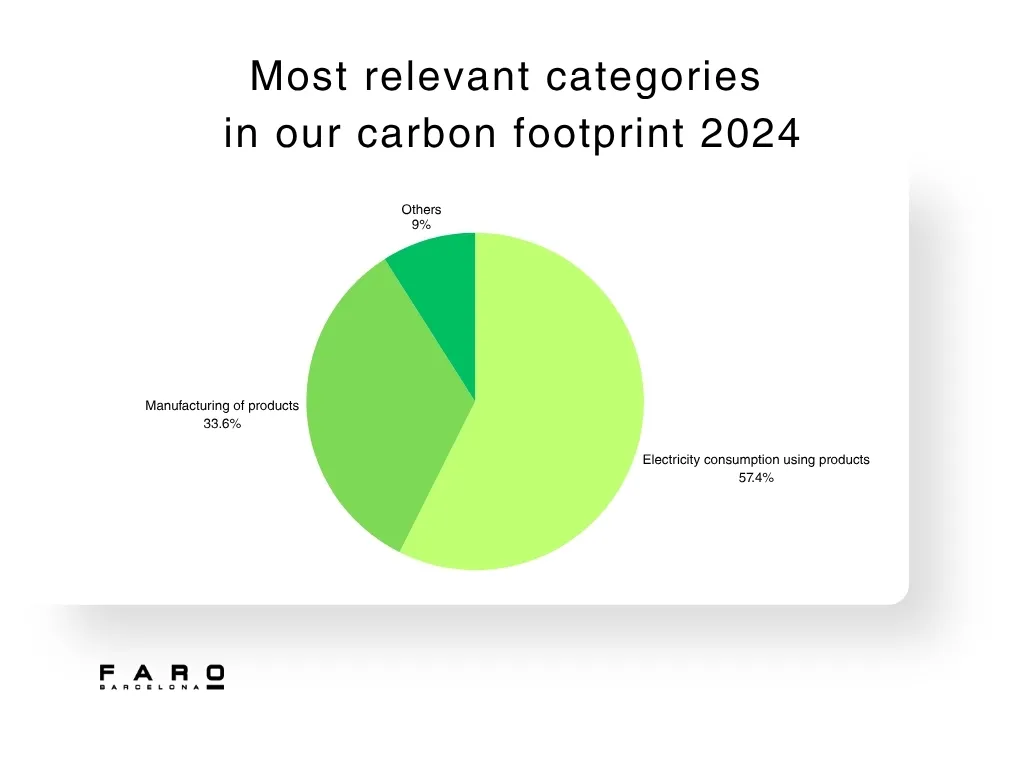
The 2024 analysis also shows that 57% of total emissions come from the electricity consumed by products during their use, and another 34% is linked to their manufacturing. That’s why our efficiency efforts go beyond the production process—they extend to product design and improving each item’s final performance. Because the carbon footprint of our products stretches across their entire useful life.
These figures confirm a positive trend mainly driven by the implementation of our eco-design decalogue, which promotes more responsible design—from concept to use and distribution.
This decalogue applies a cross-cutting approach to our product design. It highlights key aspects such as energy efficiency, which helps reduce energy consumption throughout the product’s lifespan. This is the case with our fans, which have evolved towards DC motors—lower consumption, more energy efficient, and with an optimized design that reduces both weight and the amount of material used in manufacturing.
We’ve also worked to optimize our production and supply chain, helping reduce our carbon footprint. Key elements in this process have included choosing lighter materials with a lower carbon footprint, increasing the use of recycled and/or recyclable materials; modularity, which allows for standardized spare parts; and end-of-life design features like disassemblability, which makes recycling and repair easier.
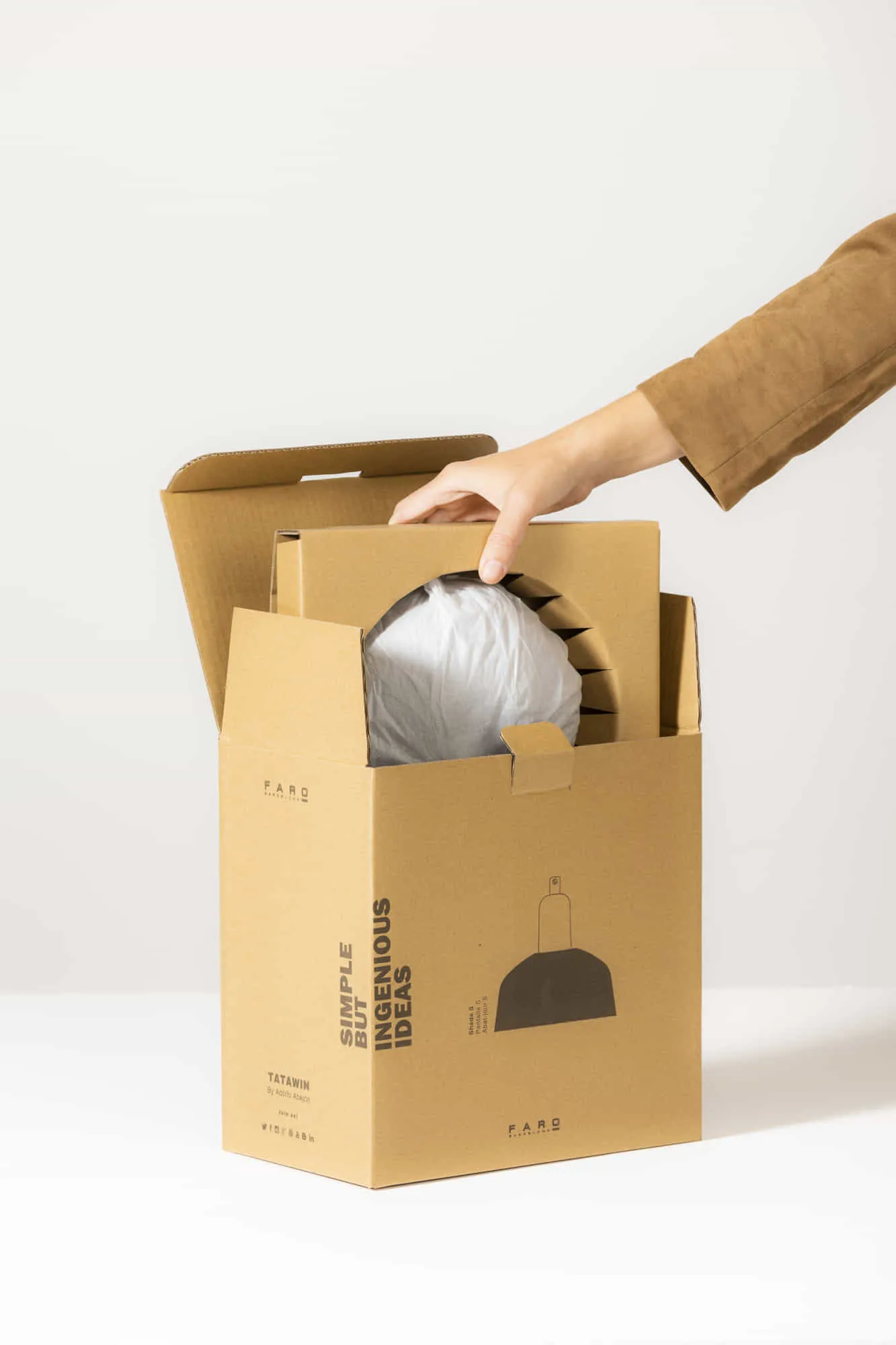
And of course, we’ve also improved our product packaging, eliminating plastics and promoting the use of cardboard, paper, and biodegradable bags. We’ve opted for flat pack formats whenever possible, as in the case of our Luang and Cata families. We’ve also focused on grouped packaging and palletizing, reducing plastic use and turning to bulk options whenever feasible.
All these strategic decisions have enabled us to continue reducing our environmental impact year after year. They help us identify where we’re having the greatest impact and where to keep improving. These improvements have meant we consistently exceed our annual carbon footprint reduction target of 1%.
As part of this ongoing improvement process, every year we submit our Organizational Carbon Footprint calculation for independent verification. This confirms that our greenhouse gas inventory—including direct emissions (scope 1) and indirect ones (scopes 2 and 3)—meets the ISO 14064-3:2019 standard. On 10/07/25, we renewed our certification, reinforcing our commitment to transparency and rigorous environmental management.
We keep moving forward without shortcuts—just real commitment and long-term vision.