Gon Architects signs Casa Binôme, a full renovation of a unique 80 m² interior penthouse laid out as a duplex within a 1900 building, located just a few metres from Plaza de España in Madrid. The home, with its very narrow layout (just 3.25 metres wide), south-facing orientation and a terrace on the lower level, raised a clear challenge: how to rethink the space without losing light or openness. The project is driven by a strong idea: to use the staircase as a conceptual and constructive axis, turning it into circulation, storage and living space.
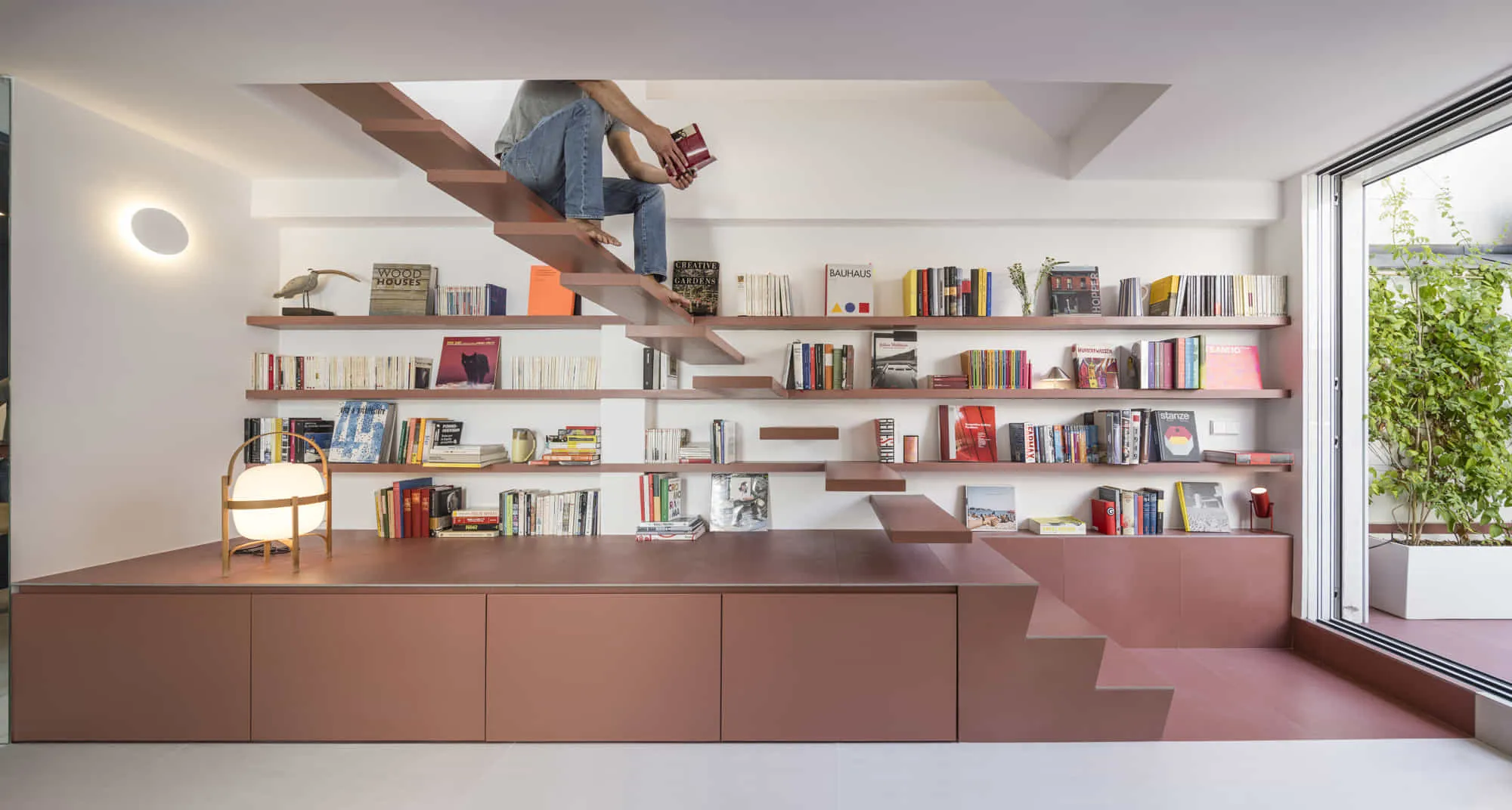
The Luna wall light, by Faro Barcelona, lights up and enhances the staircase-furniture-bookcase in Casa Binôme.
Before the renovation, the apartment was heavily compartmentalised, with bland, hotel-style bathrooms, a terrace disconnected from the interior and an oversized kitchen that broke up the space. At the centre of these issues stood the original staircase: a monolithic welded steel volume, rigid and dominant, which took up too much room, blocked natural light and created leftover spaces that were difficult to use.
The intervention completely rethinks this key element. The staircase is relocated to the east wall, on the opposite side from its original position, which involves opening a new void in the upper slab and almost entirely clearing out the interior. This move makes it possible to work from a blank canvas from which to rethink the home.
The new staircase is designed to blend naturally into the domestic architecture. Light and almost hidden, it moves beyond its purely circulatory role to become a hybrid system that brings together multiple uses. It works as a bookcase, bench, display surface or reading nook, opening up new ways of living in the space. This new way of understanding the staircase is what defines the project and gives it its name.
"This staircase-furniture-bookcase hybrid can be read as a spatial binomial, where both conditions — what connects and what contains — are inseparable."

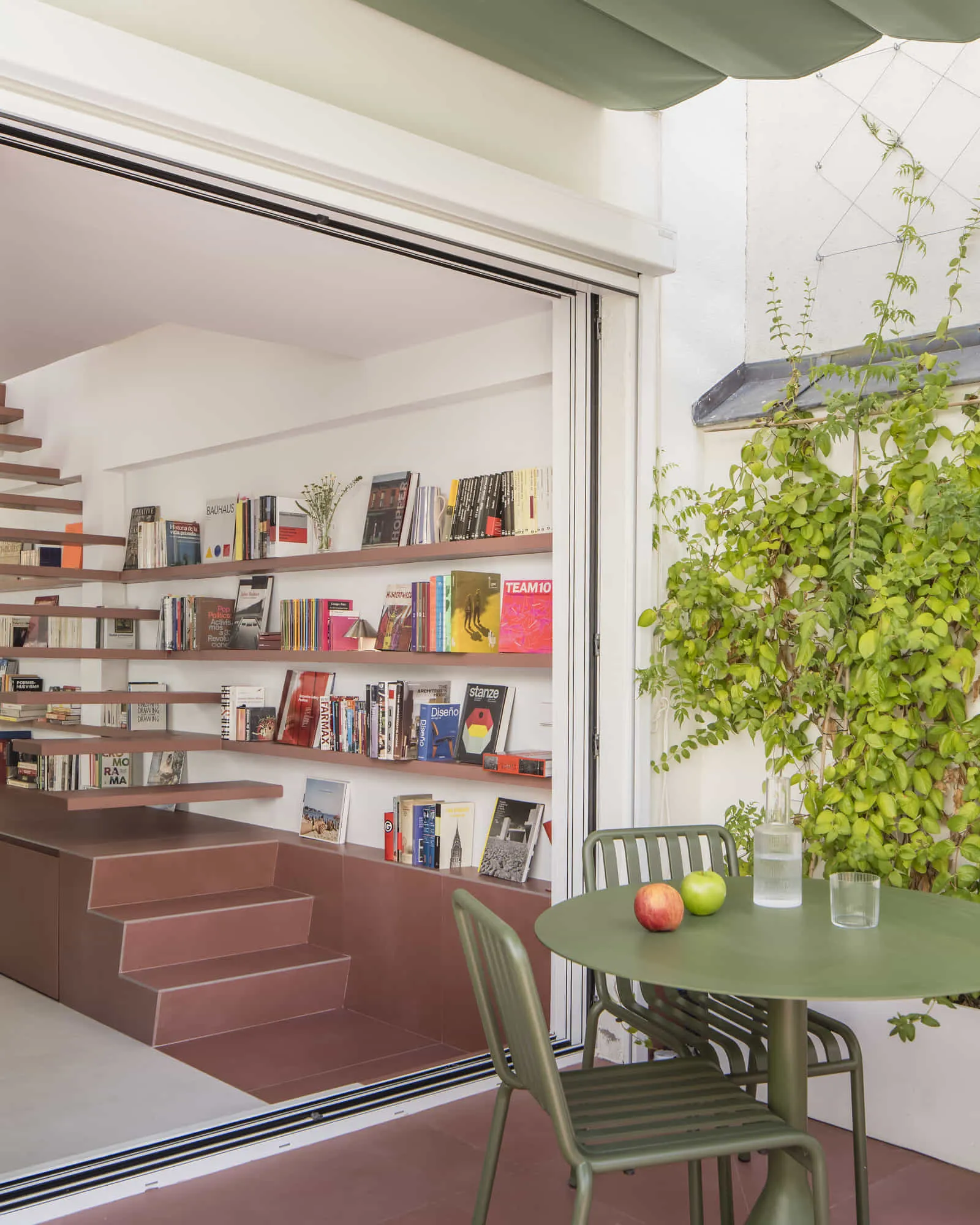
Its presence reorganises the home, improves the flow of natural light and reshapes the relationship between the two levels. The lower floor hosts the shared spaces — kitchen, living room, dining area, terrace and a small toilet — while the upper level gathers the more private areas, with two bedrooms, a bathroom and a flexible central space.
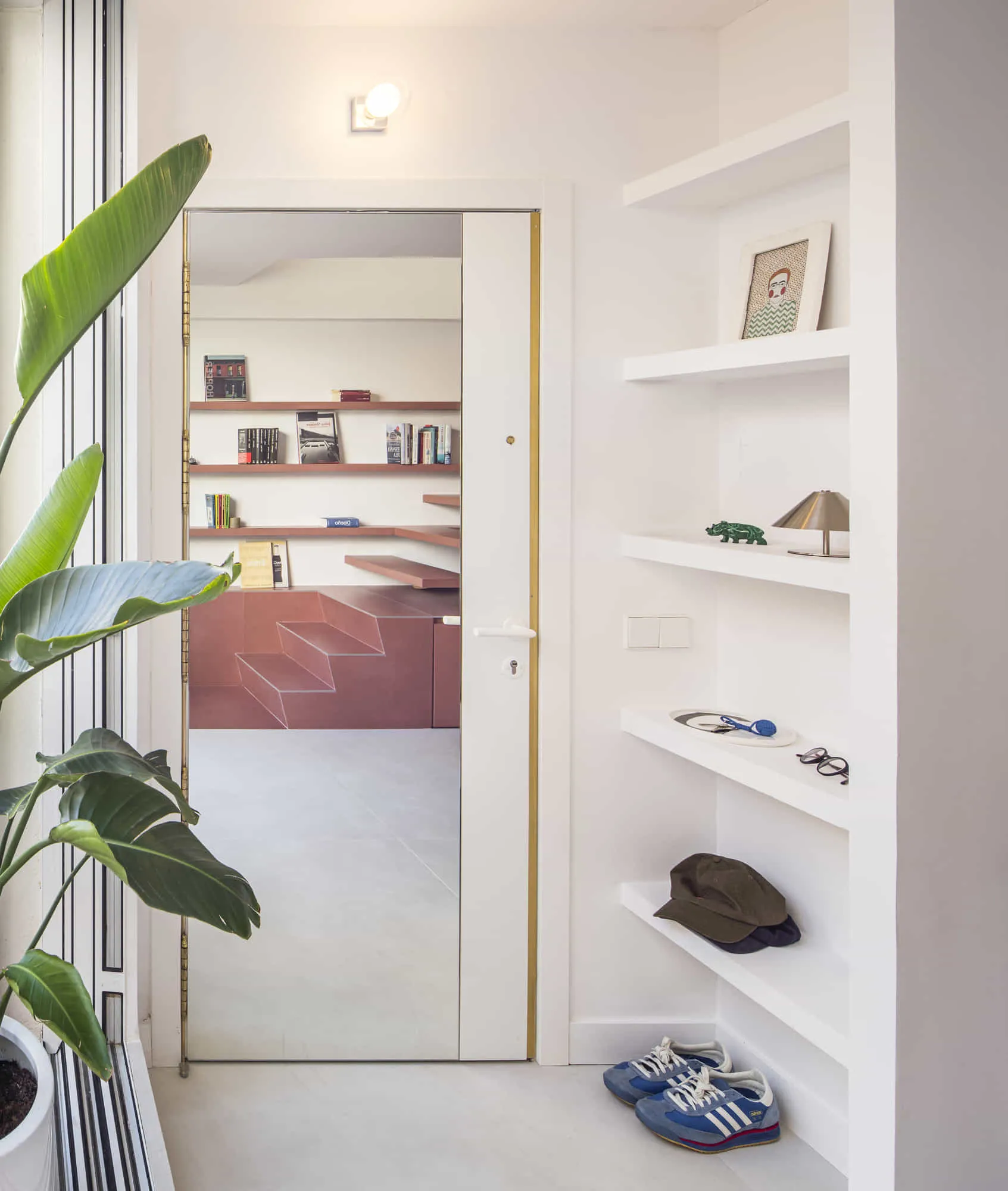
The Perla wall light, by Faro Barcelona, is placed as a subtle light point above the door.
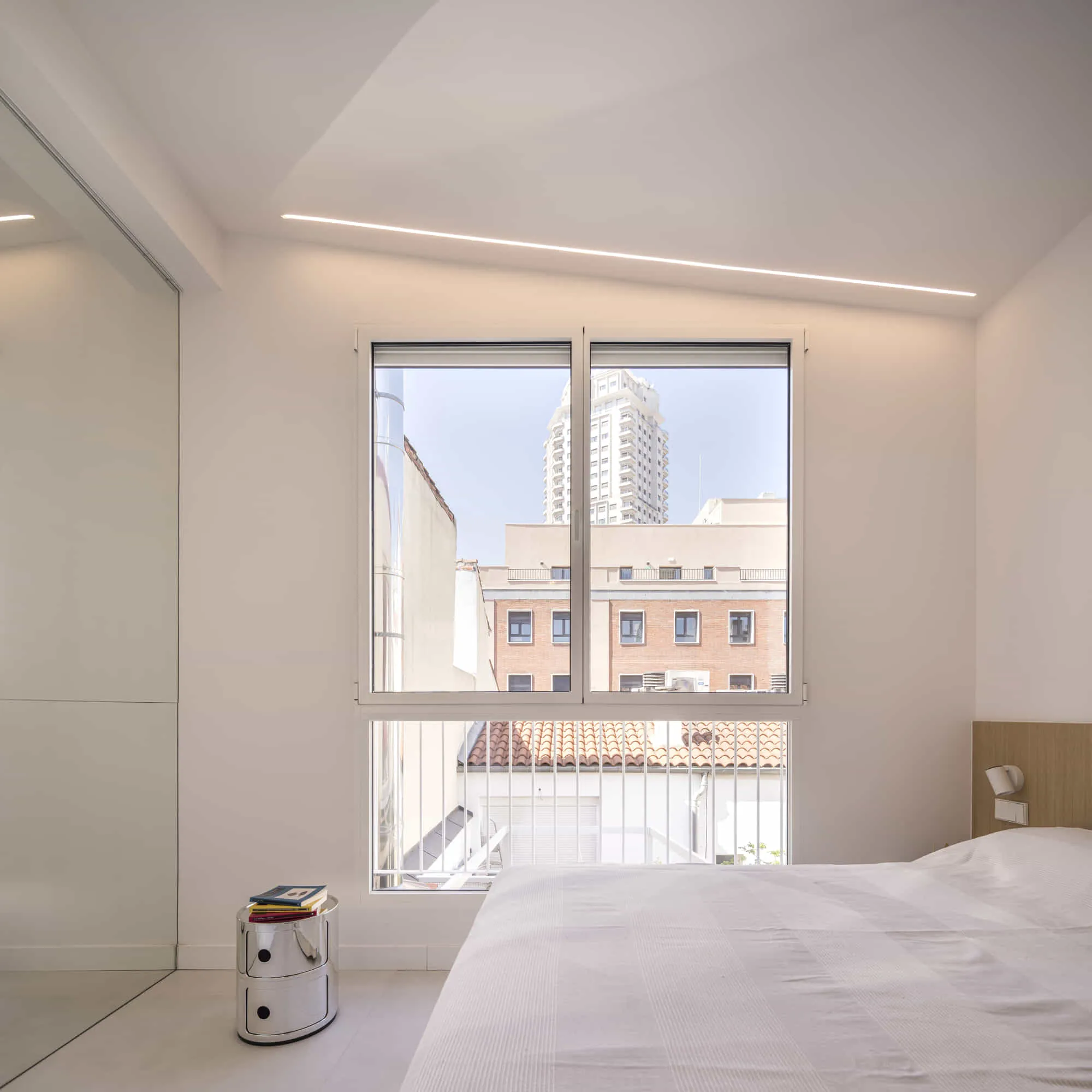
Another key feature of the project is the use of mirrors as an architectural material. The bathroom and main bedroom volumes are clad in reflective surfaces that multiply the perception of space and create a dynamic relationship with light. These prisms act almost like scenographic elements: they reflect, conceal and transform the environment depending on the daylight and the position of doors and panels.
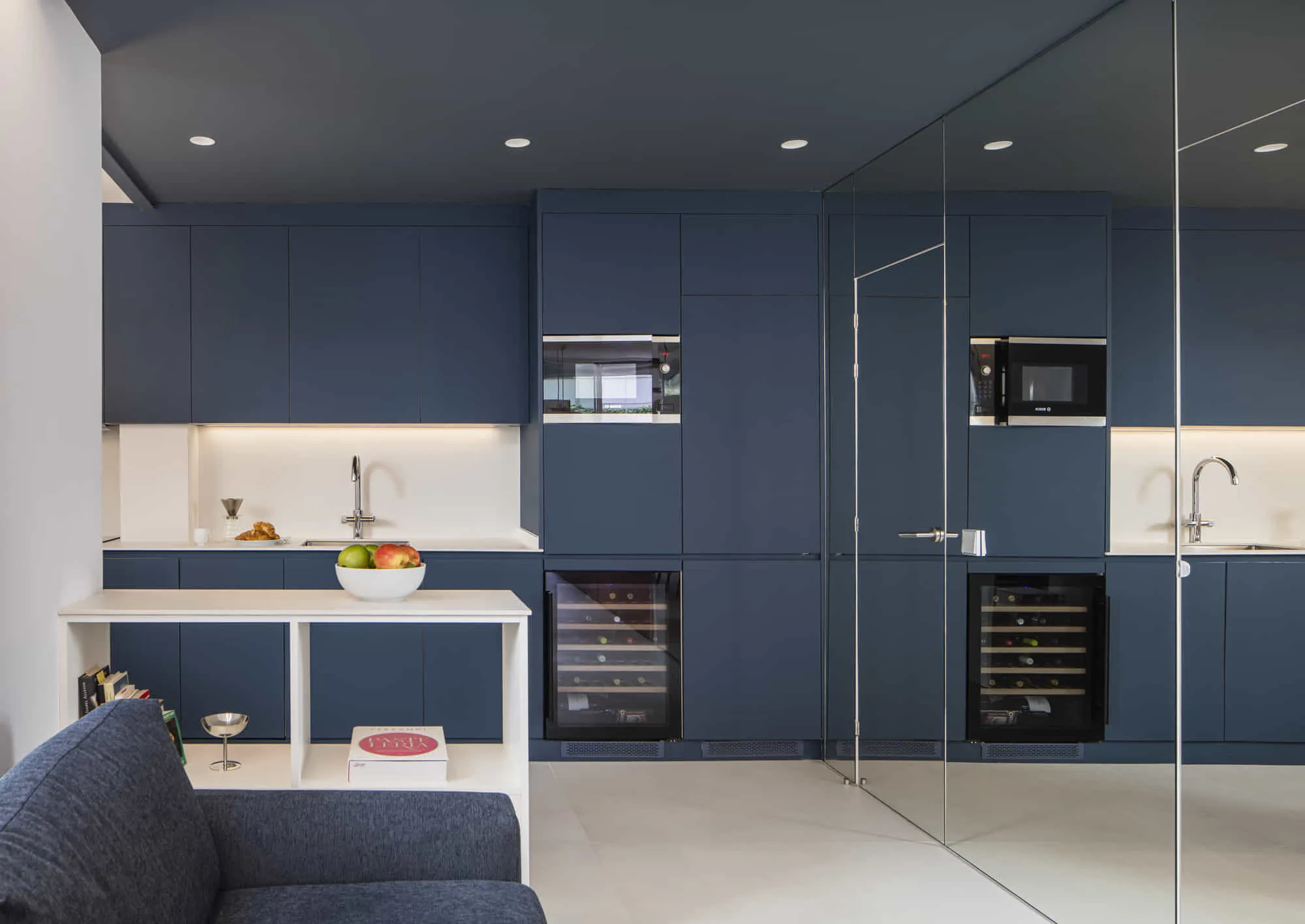
The kitchen lighting is resolved with our recessed Hyde luminaires, a solution that keeps things both discreet and highly functional.
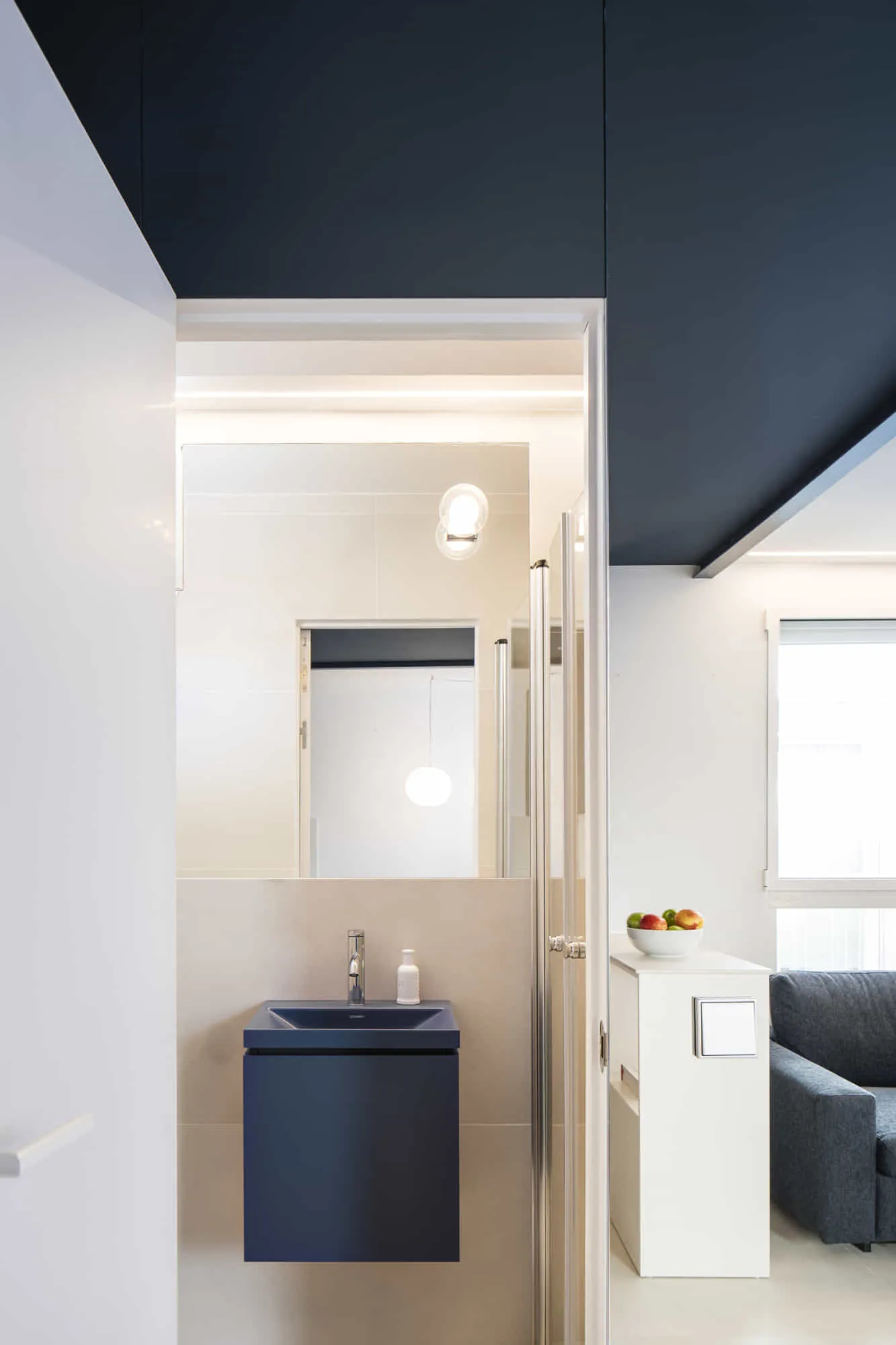
The Perla wall light also features in the bathroom lighting, creating continuity throughout the space.
The result is a sequence of spaces that visually expand, where boundaries blur and materiality shifts throughout the day. It shows how a staircase can bring value beyond its purely functional role, as Gon Architects puts it: "an element that shifts from object to place".
Credits:
Architecture: Gon Architects
Lead Architect: Gonzalo Pardo
Design Team: Carol Linares, María Cecilia Cordero, Alvine Ikauniece, Maria Konstantinidou, Nicolas Howden, Sara Mordt, Alexandra Marouda.
Construction: REDO Construcción
Photography: Imagen Subliminal (Rocío R. Rivas + Miguel de Guzmán)