

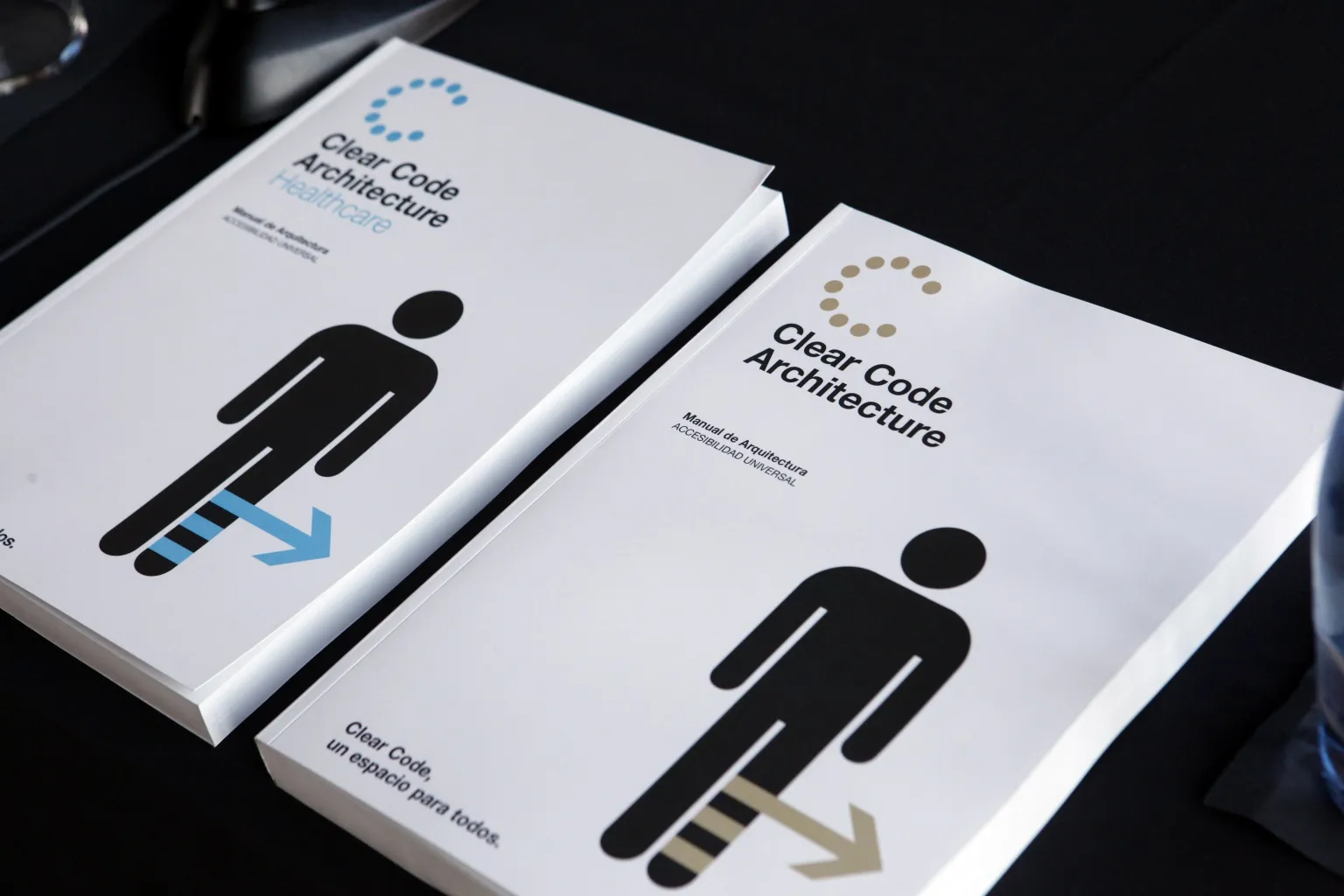
Creating products that improve people's lives, not just lighting spaces. That's our goal. Therefore, we have taken the initiative to collaborate with PMMT Forward Thinking Architecture, an architecture firm specializing in efficient, functional, healthy, humanized, and inclusive design, to conduct a universal accessibility audit of our products.
Since April of this year, we have embarked on a journey to adapt our products and make them more inclusive and accessible for our users.
What is Universal Accessibility?
Universal accessibility goes beyond compliance with regulations. It is about ensuring that everyone, regardless of whether they have a limitation or live with some type of functional diversity, can interact with our products in a safe and comfortable manner. This process involves not only considering the needs of all people, regardless of their circumstances, in handling our lighting products, but also affects other aspects such as the management of our website or the packaging of our products.
The rating given to each of these products, as well as the aspects identified as improvement points, are measured by fixed and objective parameters included in the Clear Code Architecture©. This code focuses on transforming environments and products to make them understandable and usable in all phases and circumstances of life, regardless of people's motor or cognitive conditions.
Our Path to Accessibility
The analysis started last April focused on three types of indoor lighting fixtures: wall sconces, table lamps, and floor lamps. Each of these products was evaluated to identify their strengths and areas for improvement in terms of accessibility.
The ultimate goal was to understand the strengths and weaknesses in terms of accessibility of our products. This identification will help us adapt them or even redesign them if necessary, so that all users, regardless of their condition and throughout much of their life, can enjoy inclusive and functional lighting.
This initial step has generated new improvement ideas to further increase our inclusivity. We have started a process of improving our instructions and packaging, making them more understandable for everyone and always aligning with our sustainable vision. We are also in the process of adapting our website for people with hearing or visual disabilities, with the incorporation of subtitles and other accessibility tools.
An Initial Result
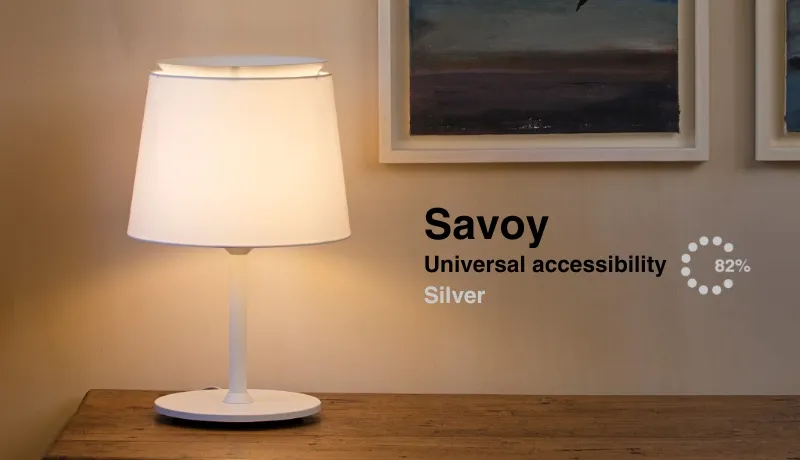
Of the 15 indoor lighting fixtures audited, 2 of them (Savoy table lamp and Savoy floor lamp) received the "Silver" rating according to the Clear Code Architecture© standards, meeting more than 75% of the universal accessibility criteria. It is noteworthy that 10 of them received "Bronze," meeting more than 60% of the parameters.
The success of this initial audit allows us to more clearly identify which lighting fixtures meet the stringent accessibility criteria set by Clear Code Architecture©, a crucial aspect in healthcare environments such as hospitals and nursing homes, where ease of use and safety are priorities.
Thanks to this analysis, we have also identified which of our lighting fixtures offer inclusive lighting, thus ensuring an easy and intuitive management of lighting, minimizing the risk of accidents and taking into account everyone's conditions. In short, these products not only comply with regulations but also improve the quality of life and autonomy of users in environments where accessibility is essential.
Social Impact and Commitment
15% of the world's population has some functional diversity, and 25% have limitations in handling the physical environment, from vision and hearing difficulties to mobility problems. In other words, 40% of the world's population may be limited in using the physical environment. According to PMMT, “At some point in our lives, we will all suffer or generate some type of limitation in the use of the physical environment.”
At Faro Barcelona, we believe that design should be for everyone, hence our commitment to leading the innovation of lighting products that improve quality of life and promote universal autonomy.
Our collaboration with PMMT is just the beginning. We will continue to strive to ensure that each new product is designed with the user at the center, ensuring that universal accessibility is a fundamental part of our design process.
This is just the beginning of a journey towards a more inclusive and conscious design, where each advancement is a benefit for everyone.