

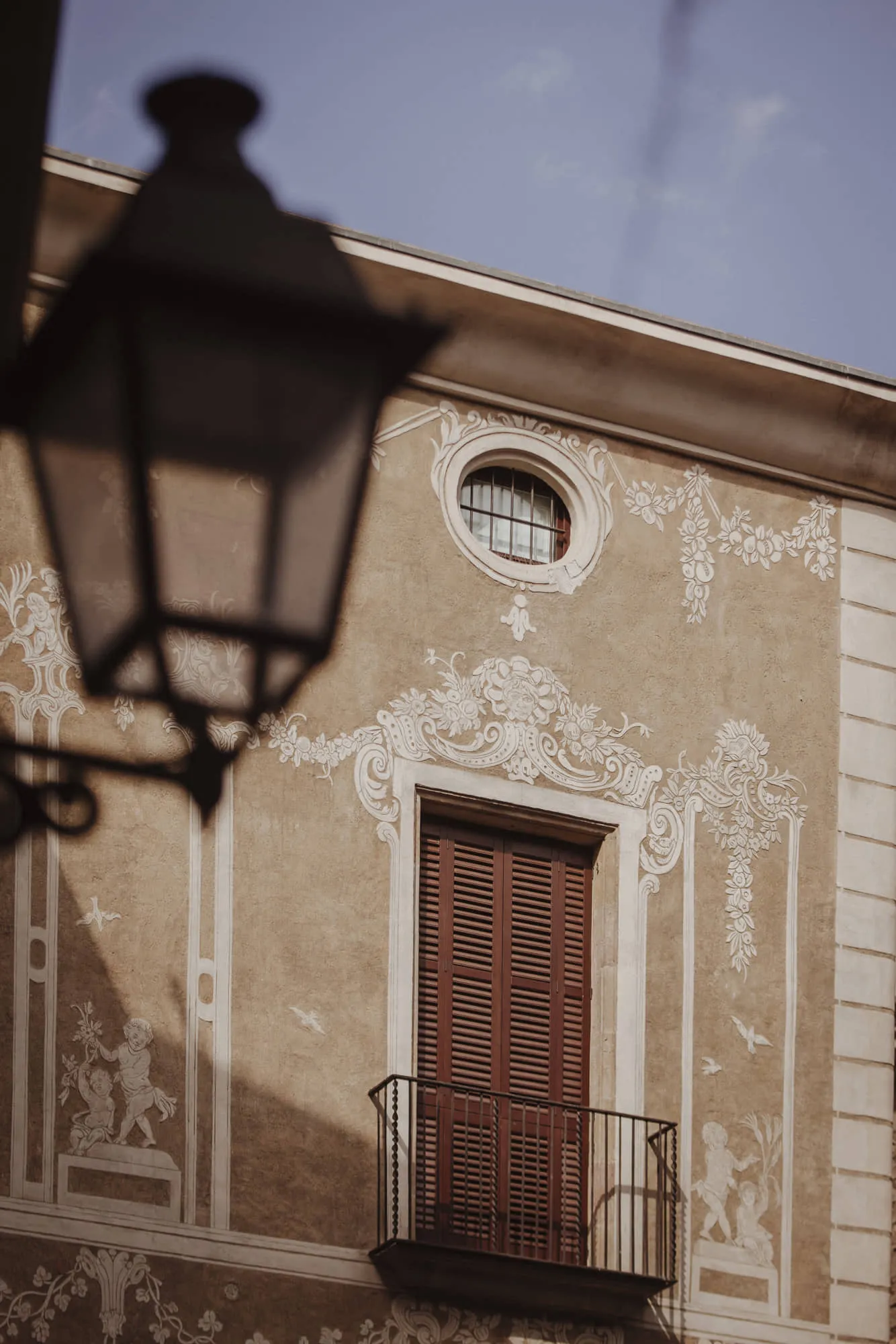
In the heart of Barcelona’s Gothic Quarter, Palau Moxó stands as the last private Baroque residence in the city. Built in 1770, this historic site has been the subject of a meticulous lighting project by Faro Barcelona and BioscaBotey, who designed bespoke lighting solutions to enhance its architecture and heritage value.
Lighting in heritage restoration
Restoring architectural heritage requires a balance between aesthetics and conservation. That’s why lighting must be used strategically to highlight volumes, emphasize decorative elements, and strengthen the building’s historical narrative. Through a combination of custom-designed luminaires, advanced technology, and a meticulous selection of color temperatures and optics, the project has succeeded in balancing functionality and beauty without overshadowing the original elements.
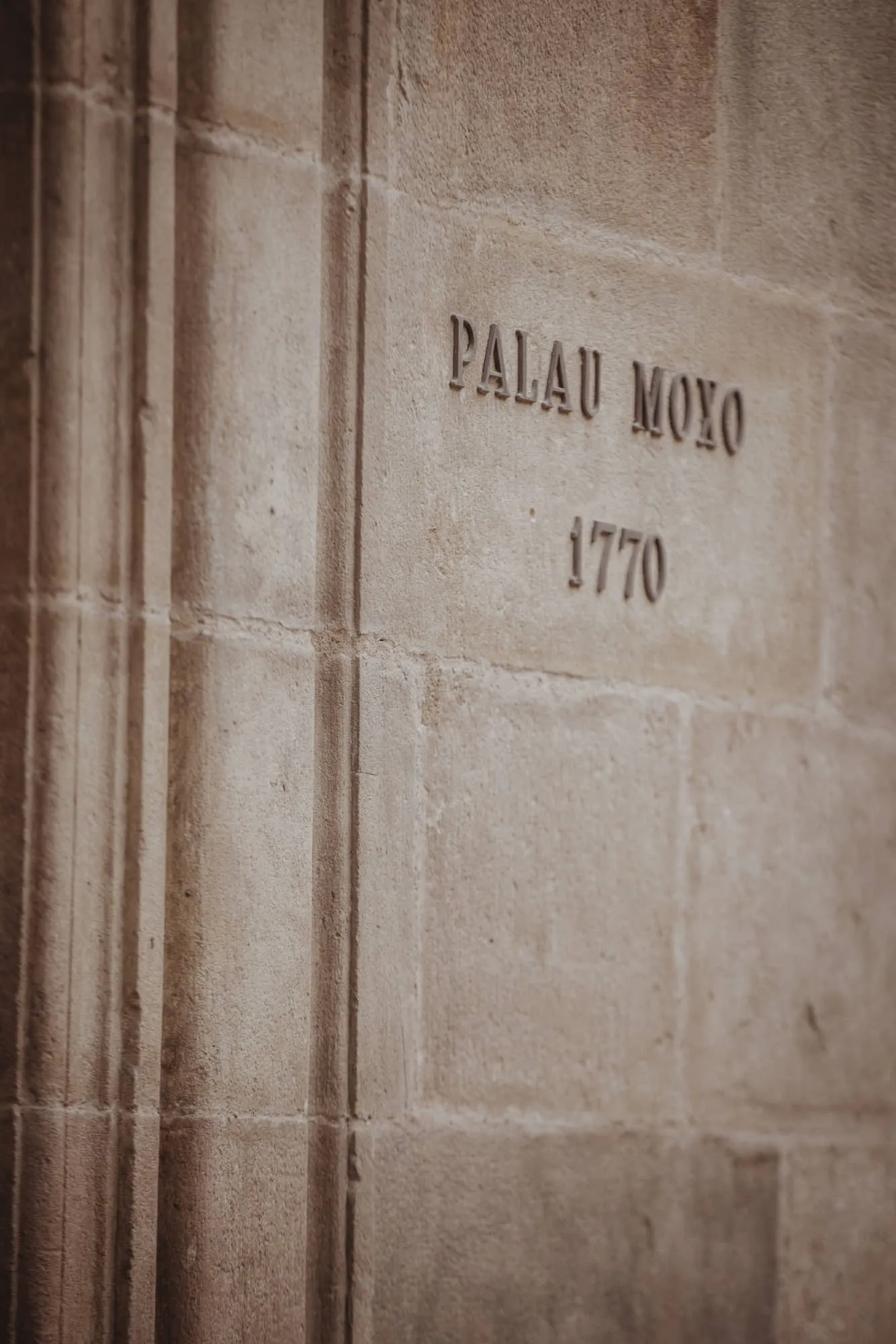
According to ICOMOS (International Council on Monuments and Sites), lighting in heritage spaces must comply with principles of reversibility, compatibility, and minimal intervention. This philosophy has guided every decision in the restoration process. “One of the key aspects of this project is the restoration process,” says Iván Meana, project director at Faro Barcelona. “We tried to recover as many architectural and furniture elements as possible, and what couldn’t be salvaged was rebuilt according to the original 1770 criteria.”
In this context, light plays a key role in conservation. Indoors, indirect lighting helps emphasize vaulted ceilings and ornamental details without creating reflections that could reduce depth or alter spatial perception. To highlight pictorial elements like the frescoes adorning some rooms, focal lighting with controlled optics is used—avoiding overexposure and minimizing heat and UV radiation.
These strategies, combined with intensity regulation systems and optimized-spectrum LED technology, allow the heritage to be lit with precision and sensitivity—ensuring enjoyment without accelerating deterioration.

A balance of history and exclusivity
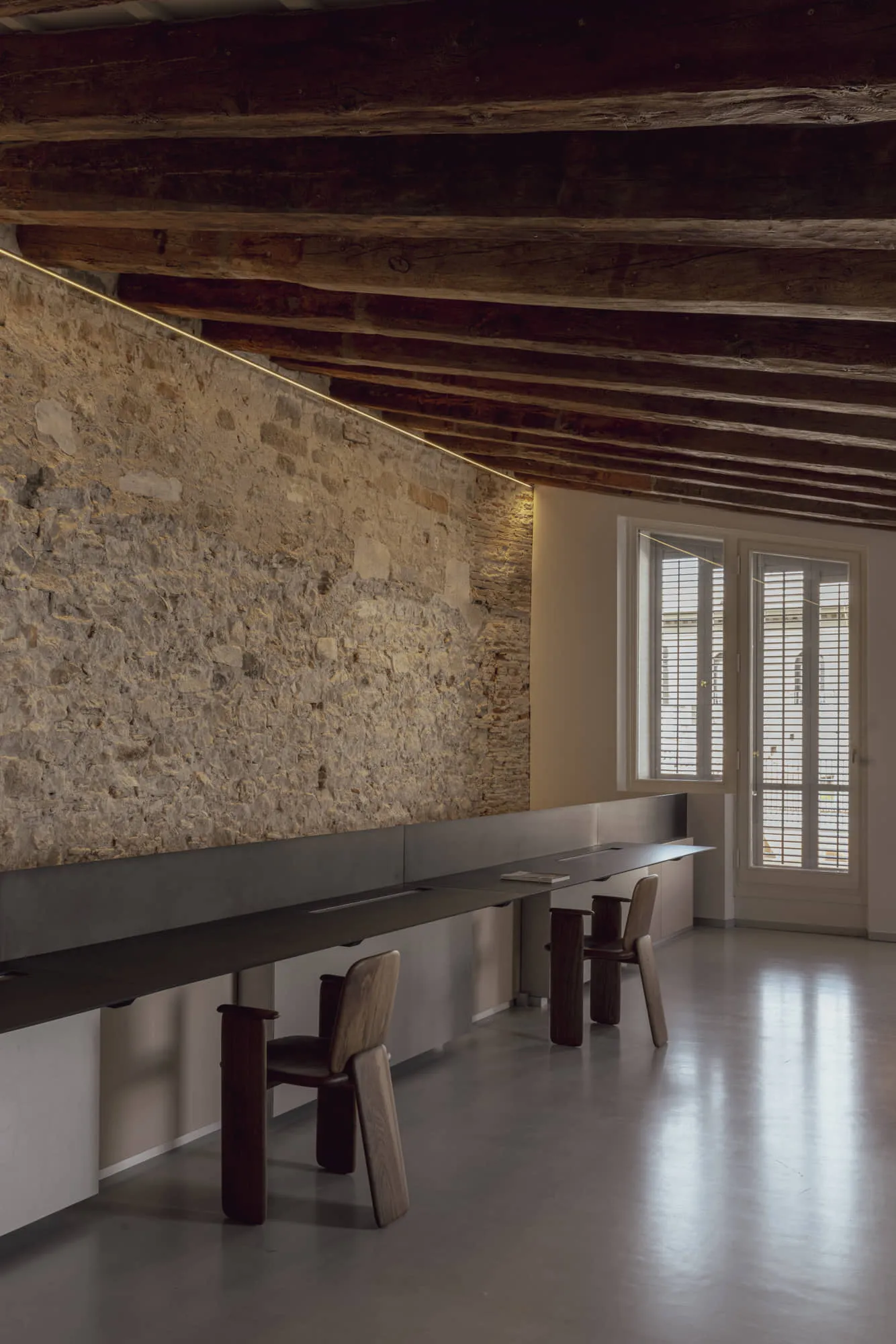
The project is divided into two zones. On one hand, the piano nobile or main floor, protected as heritage and home to unique salons and patios for events. On the other hand, the second floor houses five exclusive duplexes ranging from 140 to 260m². These are located in the upper floors of the mansion, including the attic spaces once used by the Moxó family’s service staff. The residences are designed to highlight spaciousness, natural light, original architectural details, and noble materials.
Hall: balance and elegance
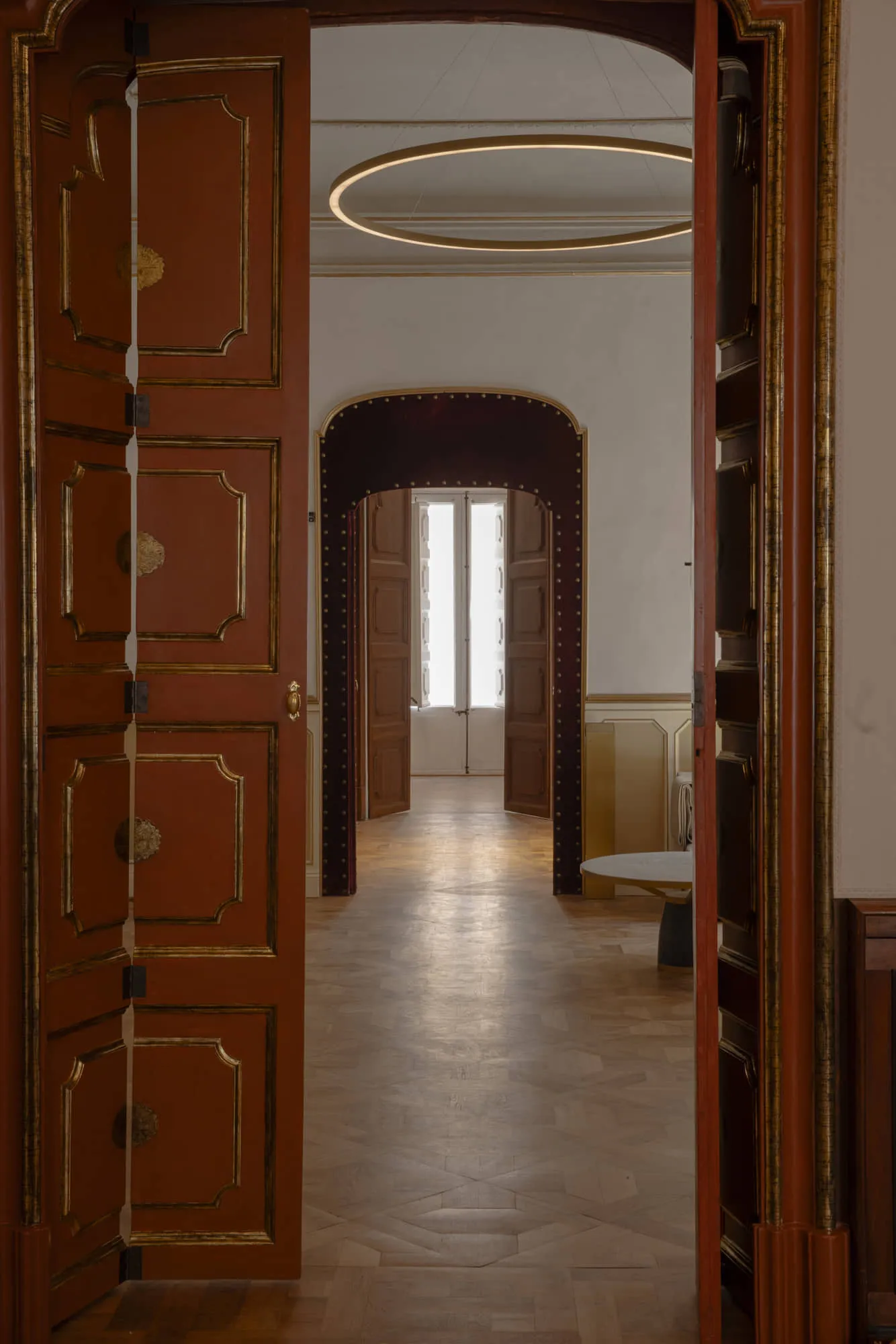
Upon entering the hall, a custom-designed pendant light greets visitors. Its structure features two brass rings, one 1.60 m in diameter and the other 1.30 m, forming an elegant and balanced whole. The lamp includes striated glass shades that conceal the light source while adding a decorative touch that harmonizes with the Baroque style without overshadowing it.

Sant Mori Room: a halo of light for a Baroque fresco
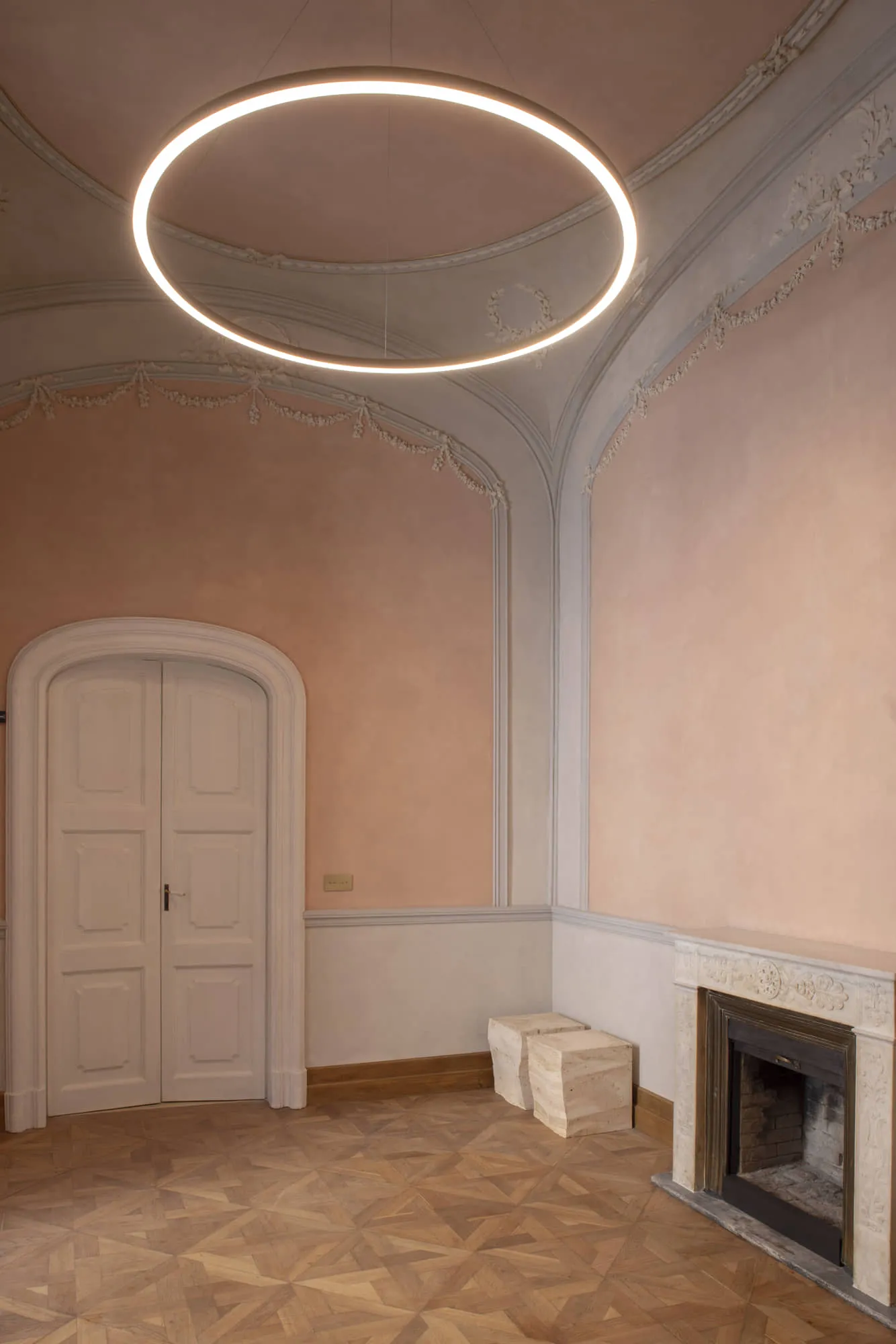
The Sant Mori room draws our gaze upward, where an ornamental Baroque fresco watches from above. This artwork, which evokes the palace’s period of greatest splendor, has regained its original beauty through an essential and painstaking restoration process—so thorough it’s hard to believe it was nearly destroyed just months ago.
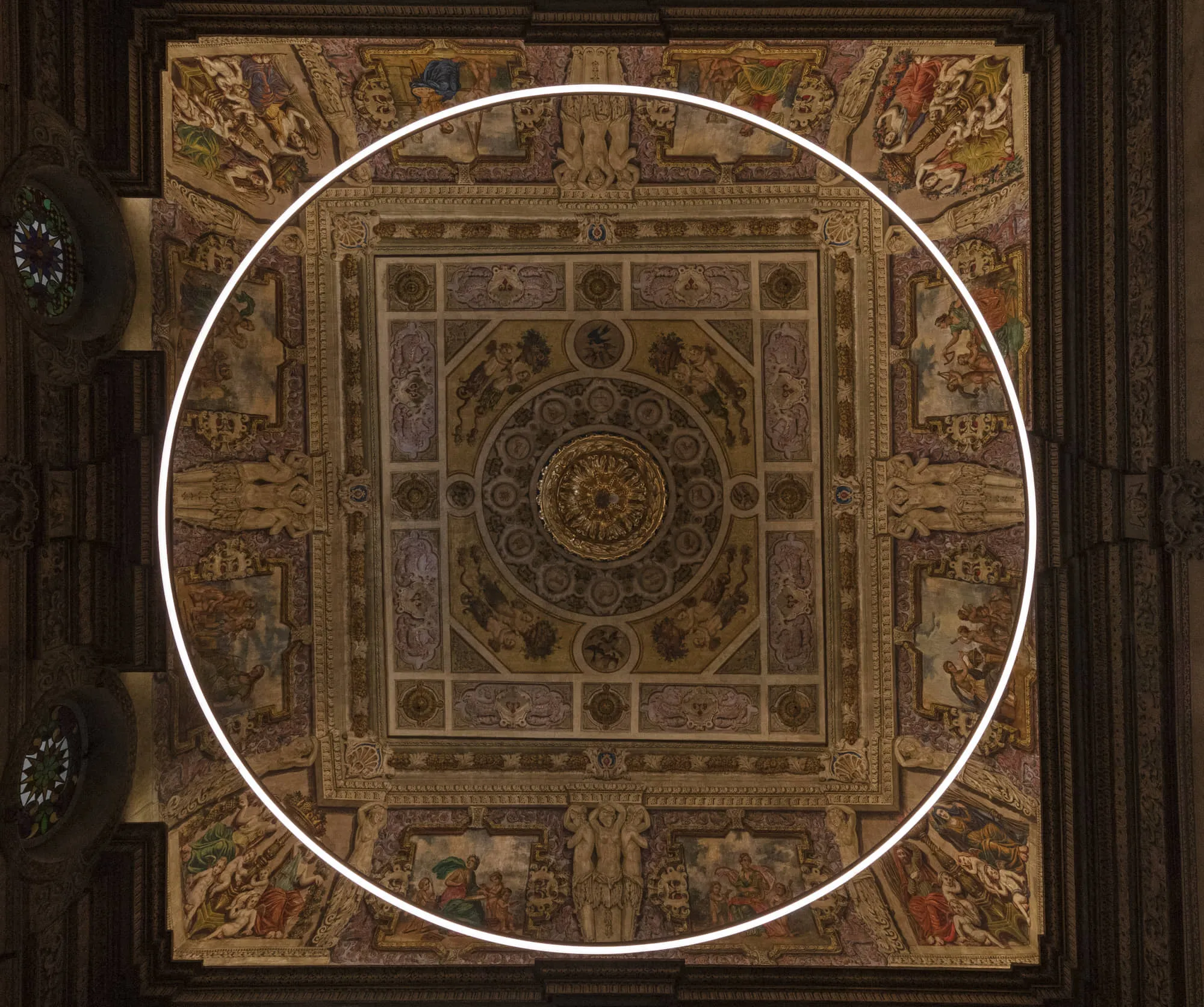
The greatest challenge was illuminating the impressive 8-meter-high fresco without compromising its conservation. A high color rendering index (CRI 97) LED strip—specifically designed for artwork—was used to ensure accurate color perception without causing damage.

To adapt lighting to different events held at the palace, a floating circular luminaire with a 5-meter diameter was created. Suspended by ultra-thin steel cables, it appears to hover over the room, preserving clear views of the ceiling from any angle. Unlike conventional flat canopies, its vertical design allows full appreciation of the central golden rosette. The luminaire features LED technology, a 2700K color temperature, and a DALI dimming system that adjusts intensity as needed.
Montcortés Room: integration without intrusion
The Montcortés Room is decorated with hand-painted wall and ceiling artwork. While the ceiling appears to be a fresco on plaster, it is in fact a stretched canvas that precisely replicates that effect.
This required a non-invasive lighting solution. A suspended fixture was designed using a threaded rod, avoiding any ceiling anchors. To highlight the ceiling’s beauty without overexposing it, LED strips with 3000K diffusers were integrated—offering the ideal tone for this type of fabric.

The bottom of the luminaire includes narrow-beam LED technology, and its carved glass shades—similar to those in the hall—ensure visual continuity throughout the palace.
A golden alcove
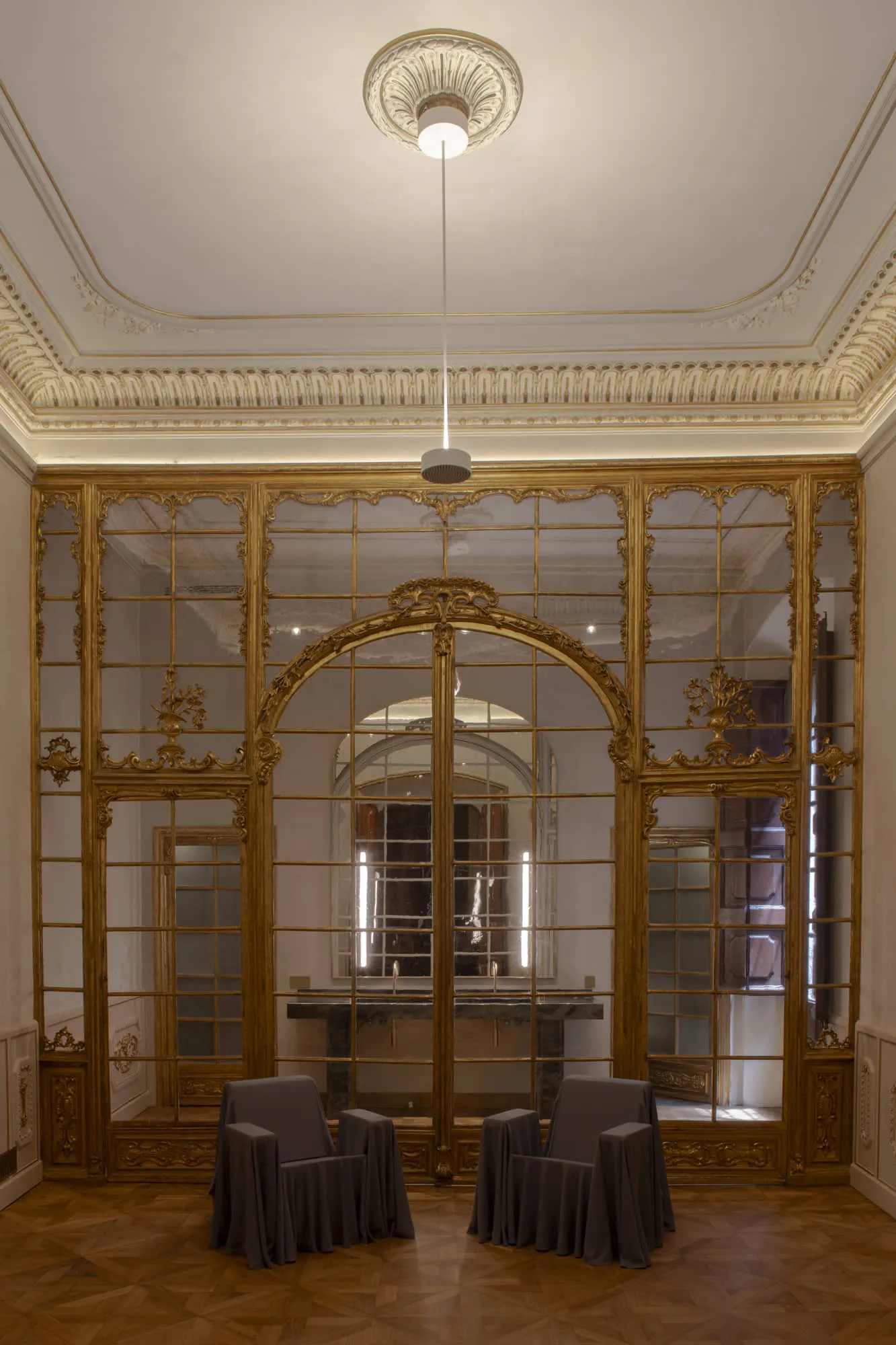
The main alcove features a golden glass screen that captures the essence of the Baroque. To respect its visual richness, an indirect technical lighting system was chosen—enhancing the golden details without glare, and creating an intimate, sophisticated ambiance.
In a space with such rich visual detail, the lighting had to integrate seamlessly. A diffuse, shadow-free system was developed to wrap the room in balanced warmth. This solution also highlights the hand-painted ceiling, adorned with gold leaf, enhancing its brilliance subtly and without excessive reflections. The result is a harmonious space where light supports and elevates the room’s majesty.
A library with history
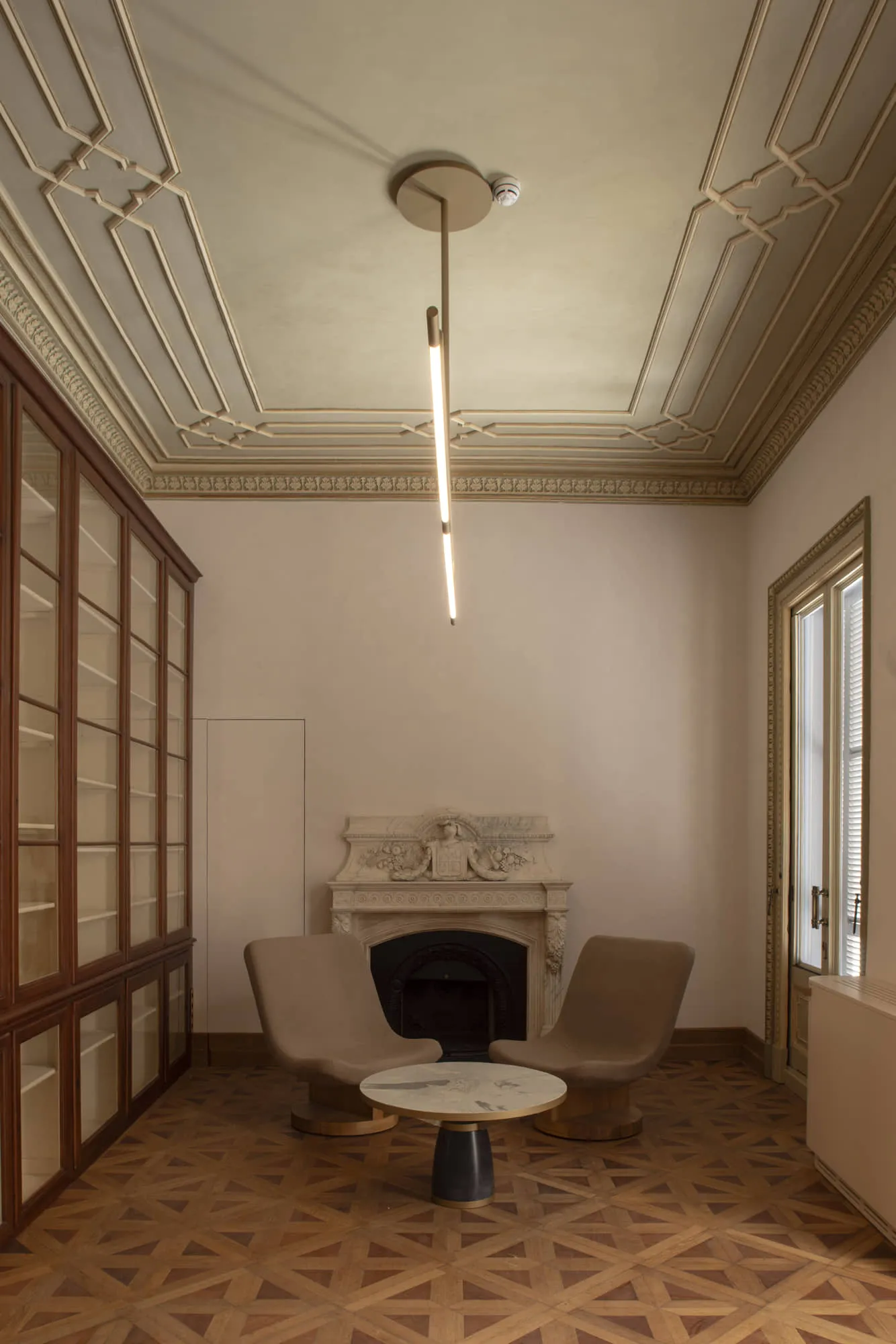
The library at Palau Moxó is a space steeped in history. It evokes the elegance of classical libraries. To light this space, a custom-designed luminaire was created, inspired by traditional lighting. It reinterprets the classic reading lamp, this time as a ceiling fixture. Its design enhances the stately character of the room and creates a cozy atmosphere—perfect for reading and study.
A gallery with balanced lighting
The gallery needed a luminaire that could meet the space’s unique needs. The aim was to light both the restored ceiling and the floor in a differentiated way, ensuring a balance between functionality and design.
To highlight the richness of the ceiling, the upper part of the fixture emits diffuse 2700K light, providing a soft, uniform glow that enhances colors without harsh contrasts. Below, small recessed spotlights with very narrow beams—also in 2700K—direct accent lighting onto the floor, avoiding unnecessary spill and ensuring efficient, clear illumination.
The apartments: a meeting point between classic and contemporary
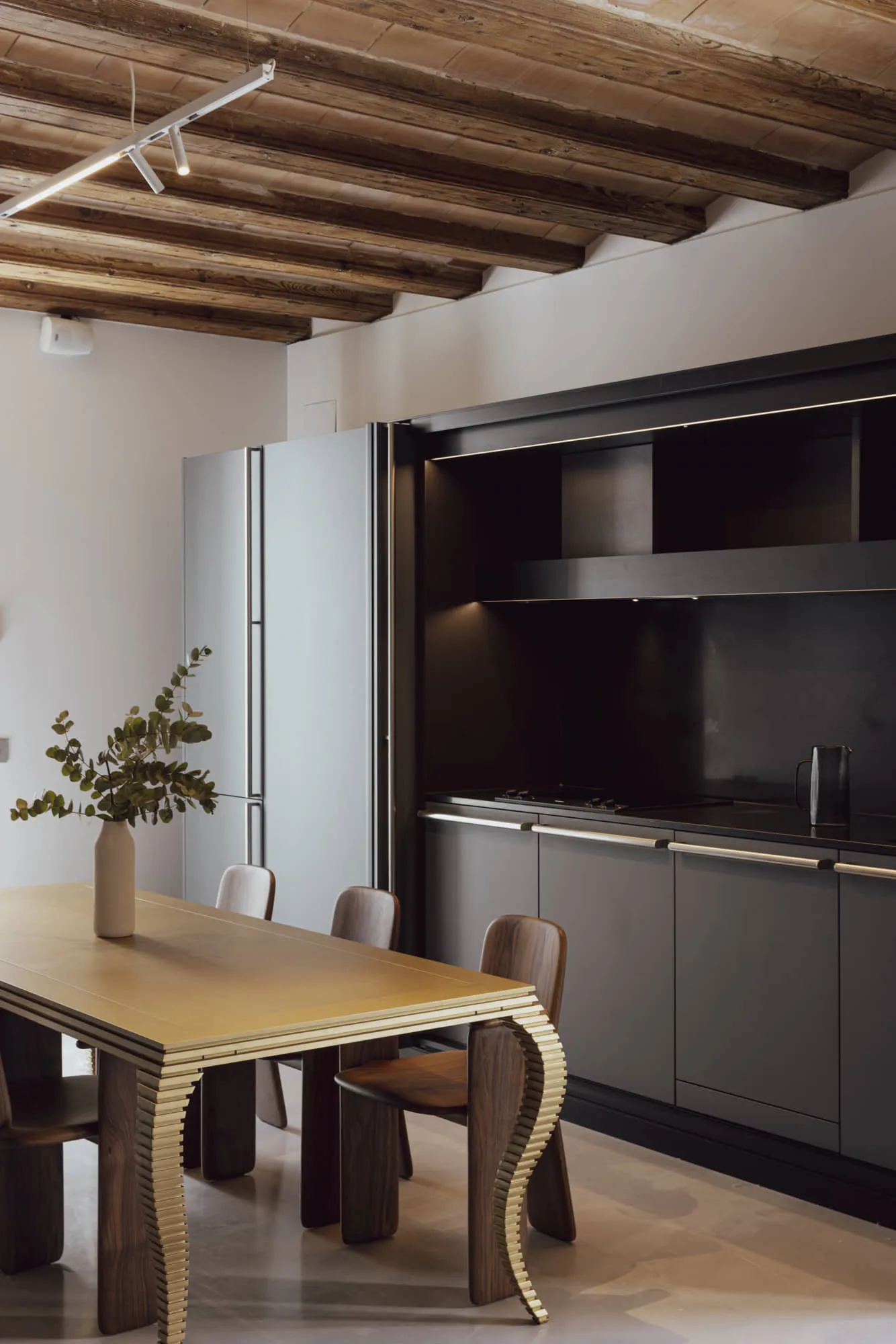
On the main floor of the palace, an independent apartment was designed to offer privacy and exclusivity within the historic setting. Separated from the event area, this space combines classical elegance with modern comfort. The layout maximizes spaciousness and usability, integrating a dining room, living room, and a retractable kitchen into one area—the kitchen can be fully hidden when not in use. The apartment also features a second space with a master bedroom, dressing room, and bathroom, all designed to respect the original architectural essence.
For lighting, recessed LED strips were installed in moldings—a discreet and elegant solution that accentuates ornamental details without altering perception. Indirect light gently washes over the surfaces, creating a welcoming atmosphere without glare. Additionally, two pendant fixtures were added—reinterpreting antique chandeliers using state-of-the-art LED technology.
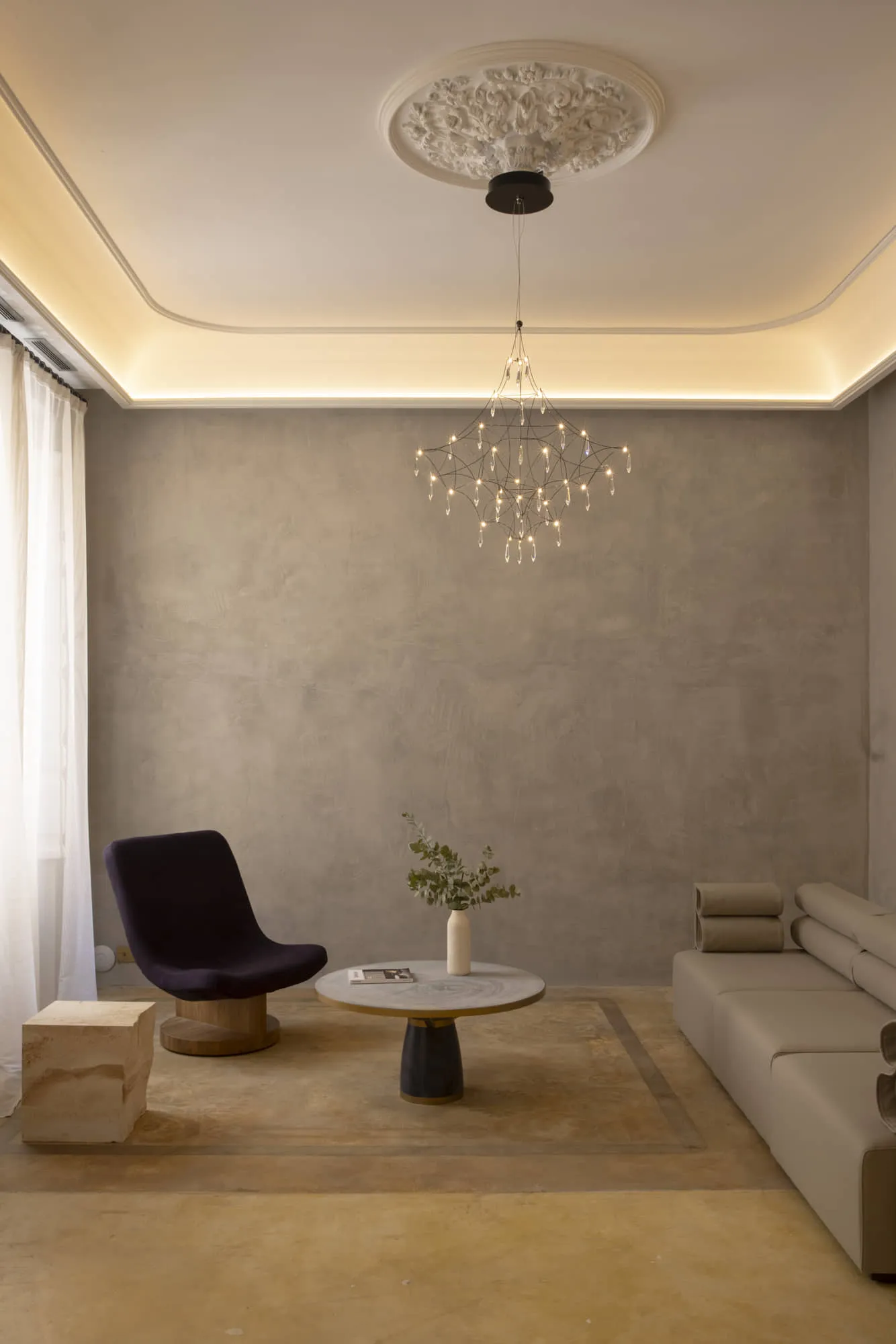
A fusion of classicism and modernity that preserves palatial charm while optimizing energy efficiency and lighting comfort.
Staircase with character
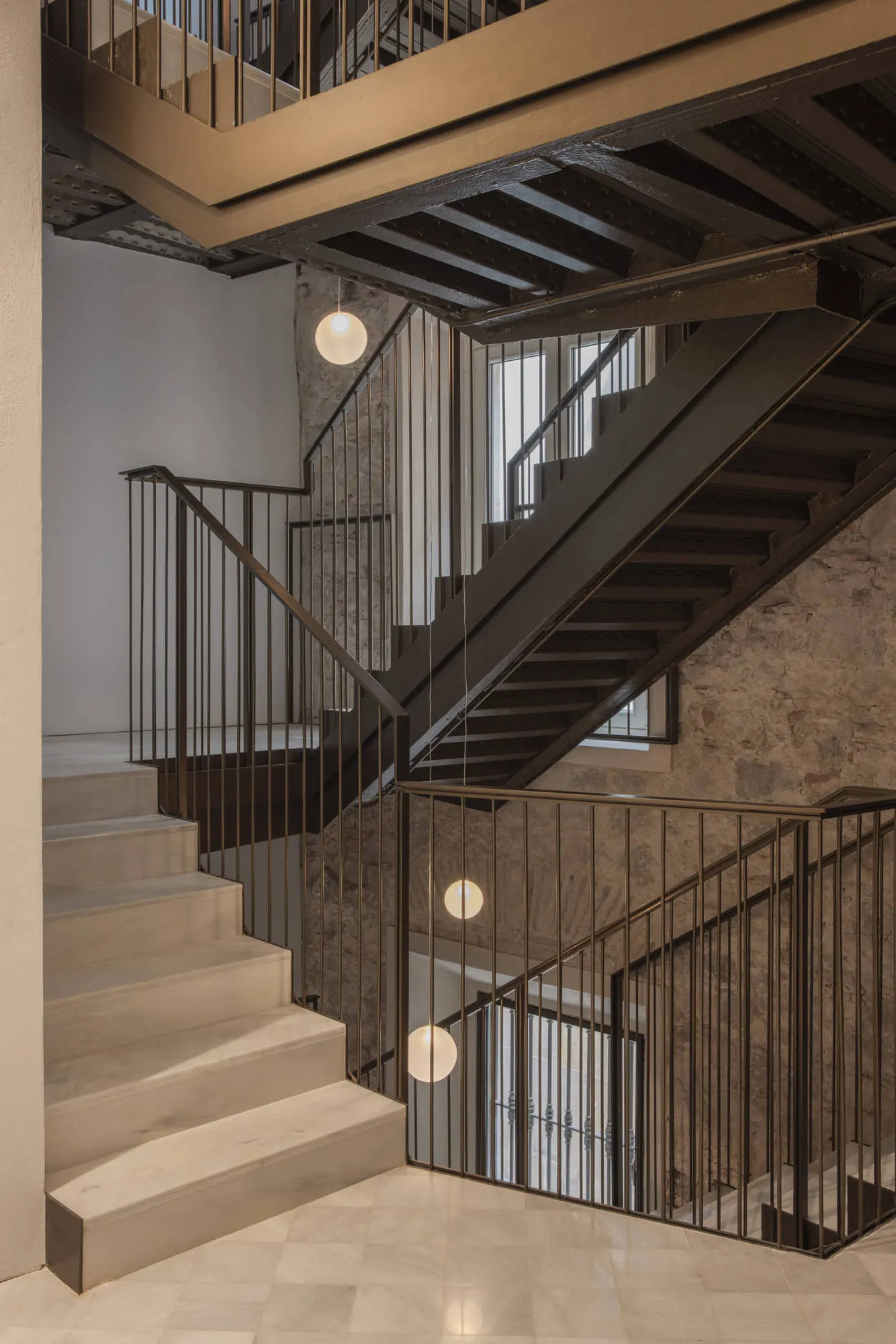
The staircase connecting the main floor to the upper apartments serves more than just a structural purpose—it’s been designed with the same care as the rest of Palau Moxó. In the stairwell, a series of hanging luminaires with rounded shapes and varying diameters descends in a cascading effect, creating a dynamic visual rhythm. It lights the space elegantly, guiding visitors up and down, and turns this corner into a subtle spectacle of light and design.
On the upper floors, where the five duplex apartments are located, lighting takes on a more functional and flexible approach. Track systems were installed to integrate general lighting into the work areas, complemented by strategically placed spotlights to highlight architectural elements in each room. This combination ensures a balance between practicality and design—tailored to each space without compromising the overall aesthetic.
Lighting as historical narrative
The restoration of Palau Moxó is a testament to how lighting can be integrated thoughtfully and effectively in a historical setting—enhancing its heritage value while offering residents and visitors a unique visual and sensory experience.
“For me, Palau Moxó is the most beautiful project we’ve done this year,” says Iván Meana, Project Director at Faro Barcelona. “We focused on what really matters: highlighting the original architecture, preserving its historic atmosphere, and restoring its interior grandeur. Watching the palace gradually reclaim its original essence was a fascinating process.”
© Photography by Javier Márquez Lera.
