

Located in Montcada i Reixac, the new Can Sant Joan Municipal Nursery School is an architectural project that focuses on child well-being. A space that supports their development through interior design and the technical solutions that make it up.
Since its conception, the project has embraced a responsible design strategy, where sustainability and environmental comfort play a key role. Natural ventilation, enhanced by the use of ceiling fans, becomes one of the essential elements to guarantee a healthy and welcoming environment in the classrooms.
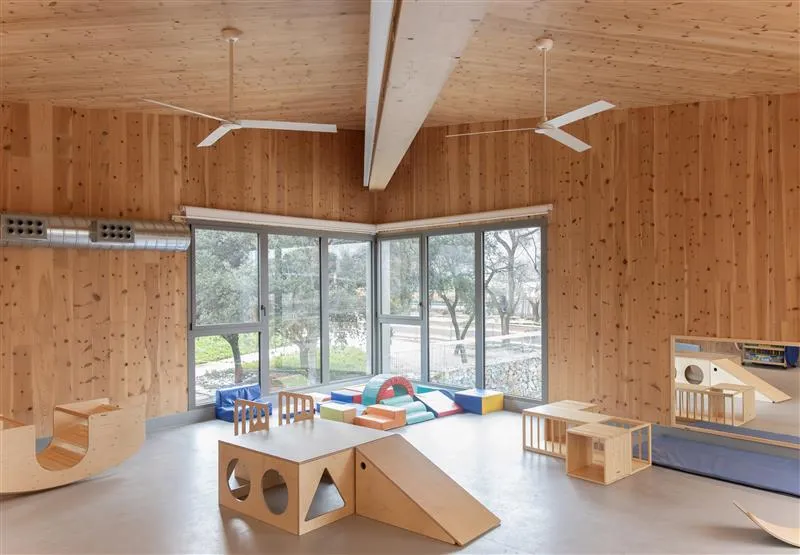
A building at the service of learning
Designing a nursery school means deeply understanding the needs of those who will inhabit it. For this reason, every corner of the school has been designed to promote autonomy, free play, and interaction between children.
The layout of the spaces aims to create a safe and flexible environment, with a palette of warm materials and soft lighting that conveys calmness. The classrooms open to the courtyard, with direct access to the outdoors, which promotes both natural light and cross ventilation. This connection with nature is a constant throughout the building, reinforcing a pedagogy where the physical environment is an active agent in the cognitive and emotional development of young children.
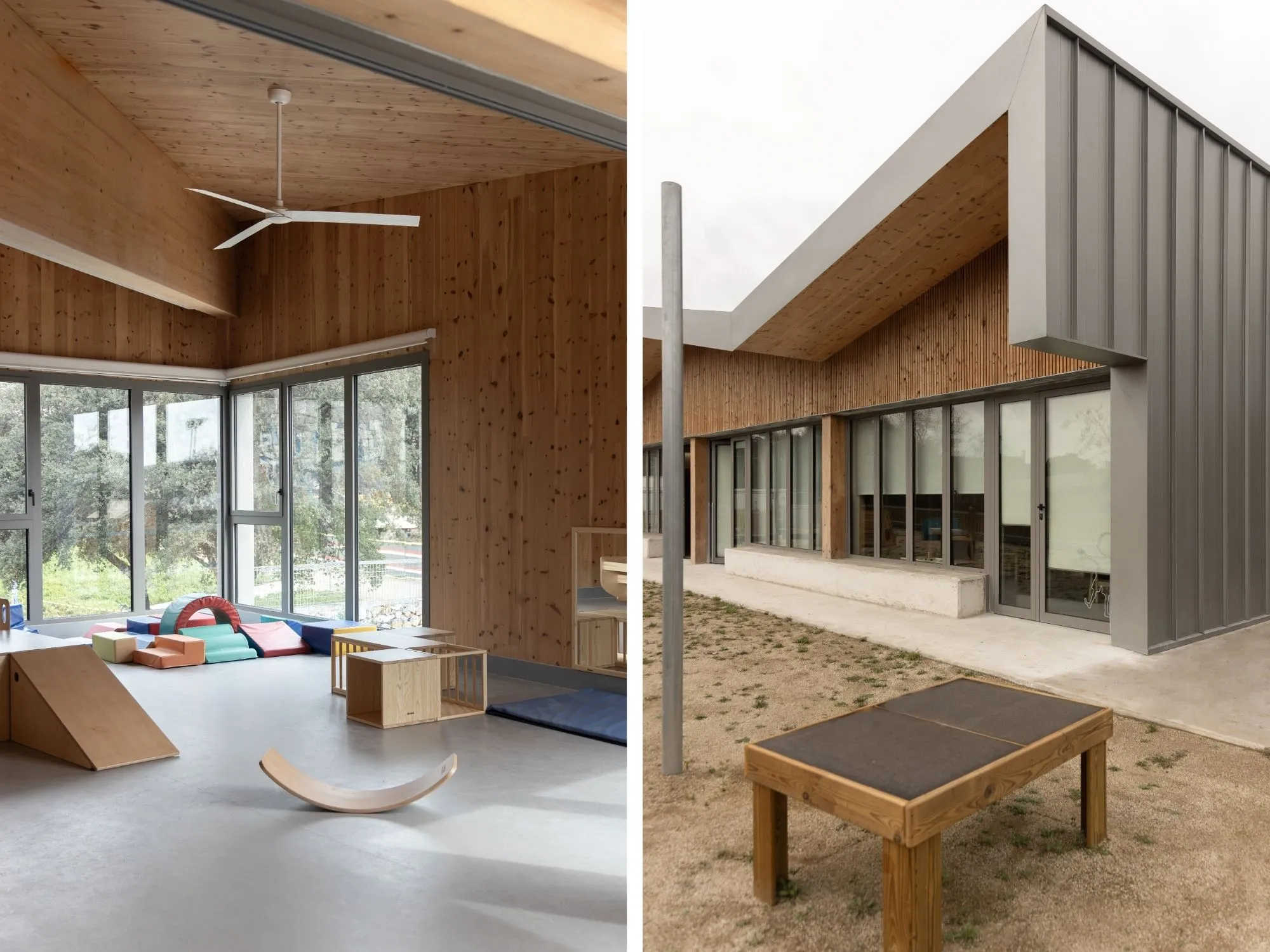
Healthy ventilation for educational spaces
In a nursery school, where children spend many hours a day, air quality is not a luxury: it’s a necessity. High occupancy, humidity generated by daily activities, and the need to maintain a comfortable temperature make ventilation in educational spaces a key aspect for health and comfort.
The project relies on natural ventilation, reinforced with ceiling fans: a healthy and quiet solution that helps maintain a stable temperature and does not emit harmful gases. "It was important to ensure constant air circulation and comfort during hot periods," says Blanca Noguera, architect at the Metropolitan Area of Barcelona who has closely followed the project’s construction.
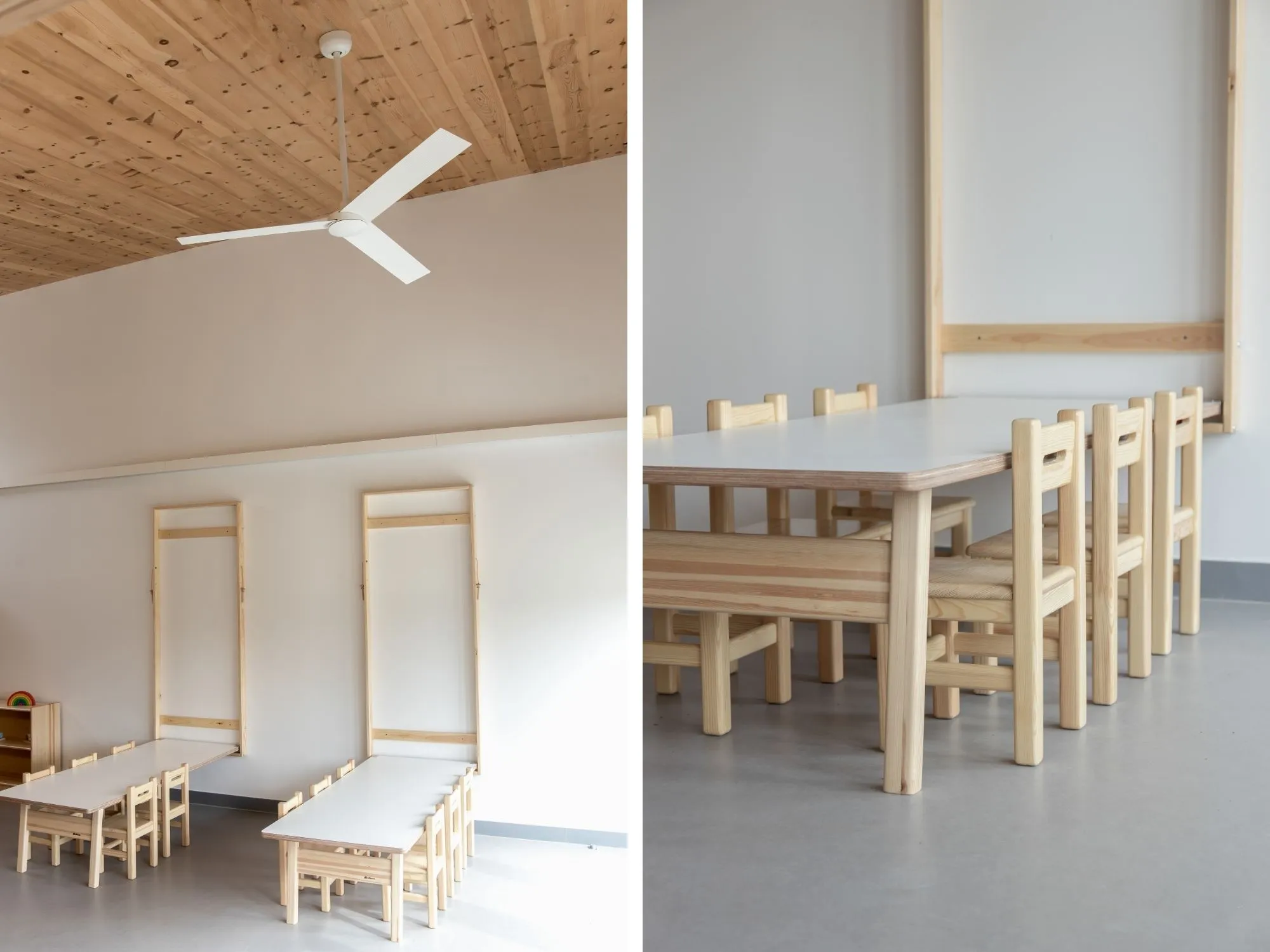
Temperature and humidity control are also crucial. Recent studies show that both factors directly influence cognitive processes and the ability to concentrate of young children. That’s why the chosen ventilation system had to meet the highest standards of efficiency, comfort, and sustainability.
The Cruiser fans, a technical and aesthetic choice
To meet all these objectives, we installed our Cruiser ceiling fans in white: two per classroom in the five main rooms, and two more in the multipurpose room.

The choice of the Cruiser model responded to both aesthetic and functional criteria. Its sober and contemporary design perfectly fits the architecture of the building, while its DC motor ensures much lower energy consumption than traditional motors, thus reinforcing the project's commitment to sustainability. Additionally, it offers precise speed control, ultra-silent operation, and a fast response to each user command.
In many of the classrooms, the ceilings are high and sloped, which causes heat to accumulate at the top. In this regard, the Cruiser fans help optimize heating in winter thanks to their reverse function, which redistributes air during the colder months of the year.
To adapt to these heights, our fans are installed with rods of different sizes, and can even be custom-ordered. All are pre-wired to facilitate assembly, making the installation quicker and more efficient in environments like schools.
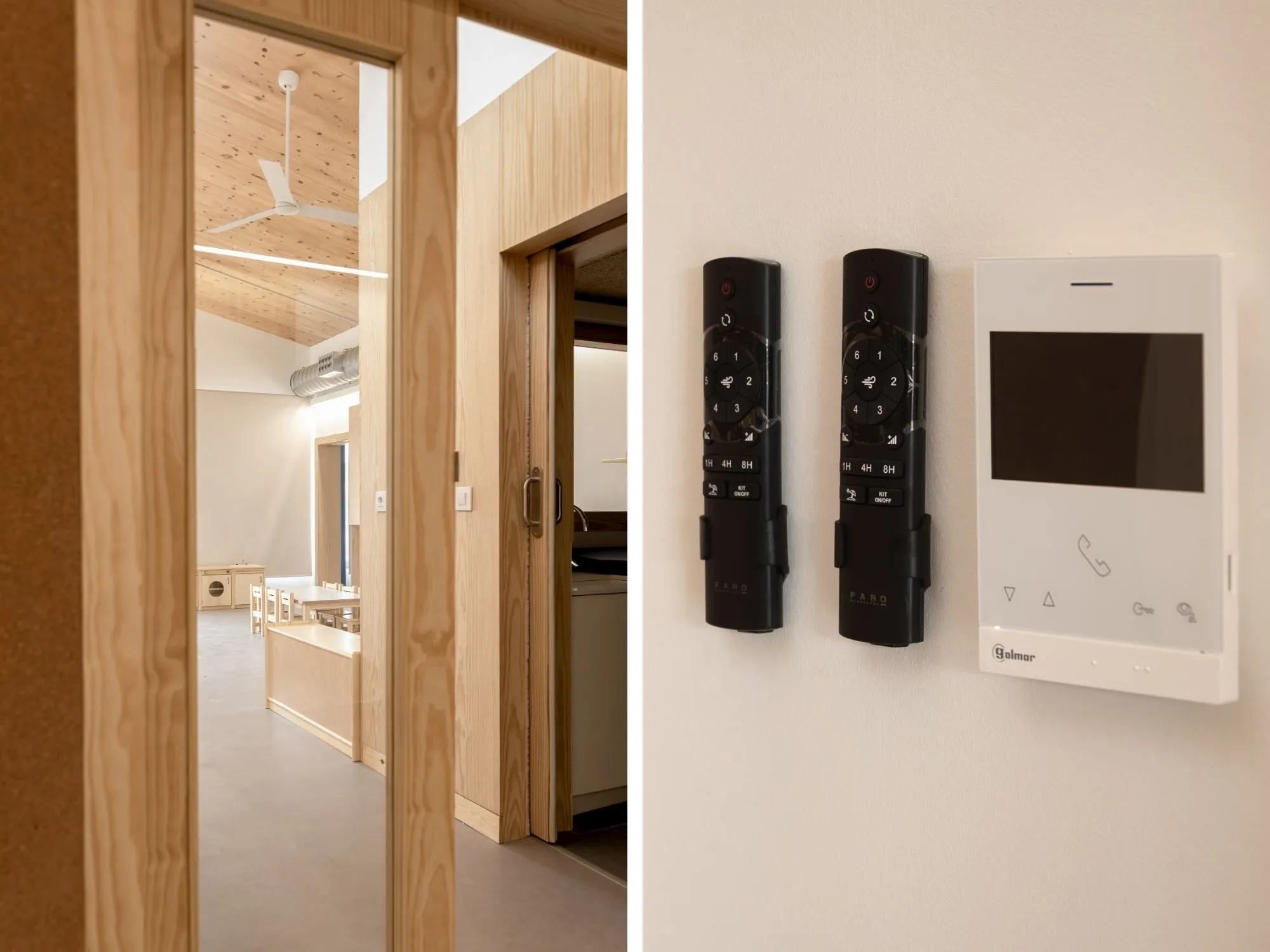
The trust, the close contact, and the attention during the product definition process were also decisive factors in choosing this solution. "We had already worked with Faro Barcelona and had a good experience, plus it is a local brand," says the architect.
Sustainability, a starting point
The Can Sant Joan Nursery School is an example of how the principles of sustainability can be integrated from the start of the design process. The focus on passive strategies such as orientation, natural ventilation, and the choice of durable and efficient materials make this building a model to follow in public educational architecture.

Ceiling fans reinforce these strategies: they allow ventilation without opening windows on extremely hot days, reduce the need for air conditioning, and provide a comfortable thermal sensation without resorting to more expensive or polluting systems. Additionally, their low energy consumption, emission-free operation, and long lifespan make them an ideal solution for a public building with an educational purpose.
Architecture with perspective
Another great value of the project is its spatial clarity. "The proposal makes an effort to offer a rich interior landscape, with maximum natural light and clear transparency towards the natural surroundings," explains Blanca Noguera. The architecture opens up to the courtyard and the green space surrounding it, creating a constant connection between the interior and exterior.
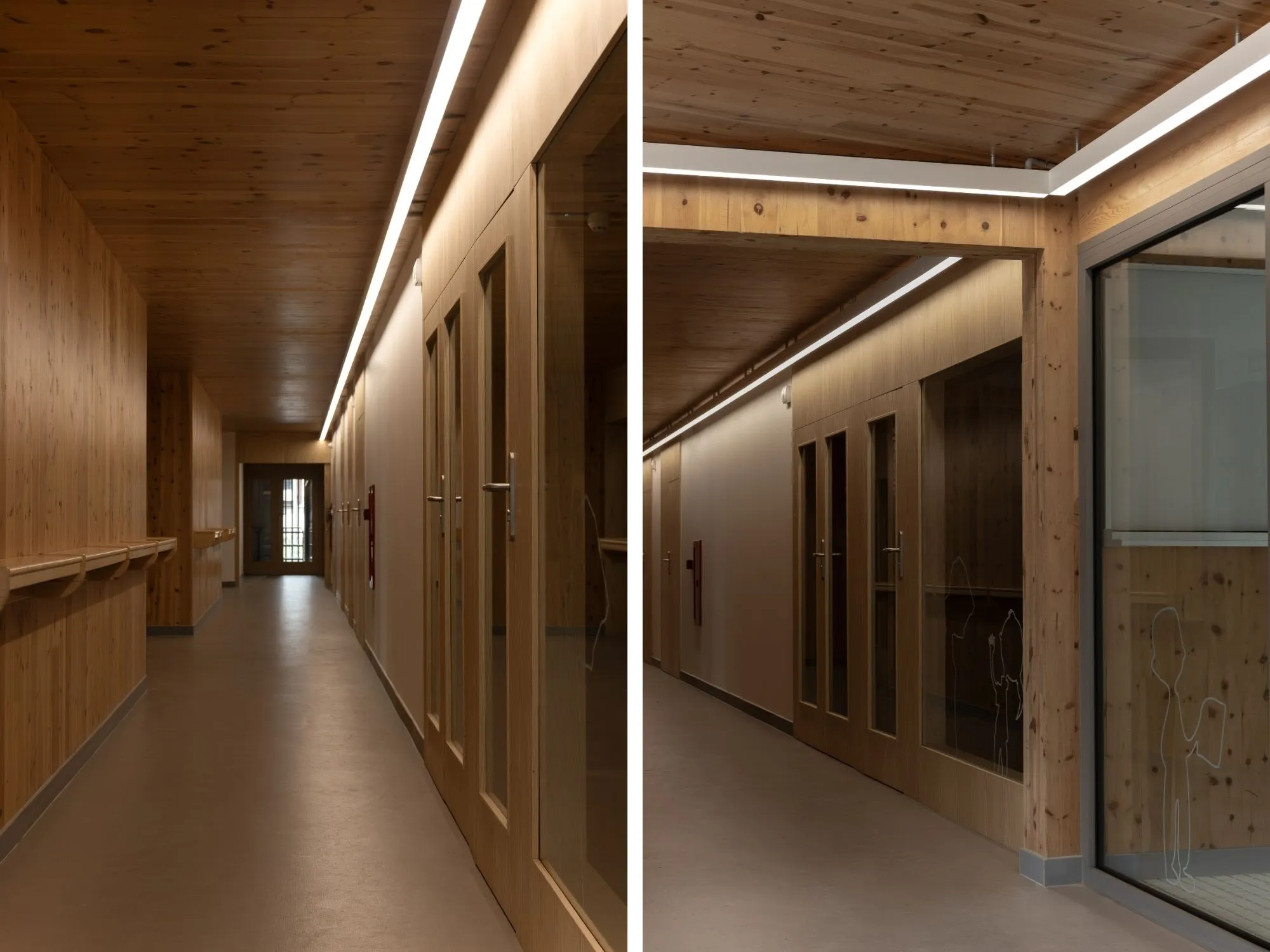
This layout is not only formal but also deeply functional. The building is oriented and modeled to favor passive behavior: it maximizes natural light and cross-ventilation, adapting to the terrain's topography. The classrooms and main areas open onto the courtyard, while service areas are located at the rear, concentrated in a compact block that shields the whole complex from the imposing presence of the nearby cement factory. In this way, the center feels integrated with nature, rather than in an industrial environment.

Credits
A project made possible thanks to the collaboration between the Montcada i Reixac City Council, the Government of Catalonia, and the Province of Barcelona.
The project and work supervision were carried out by the Metropolitan Area of Barcelona.
Photographs by Faro Barcelona.
